Nguyễn Thị Ti / Thân Khai Tập Hải
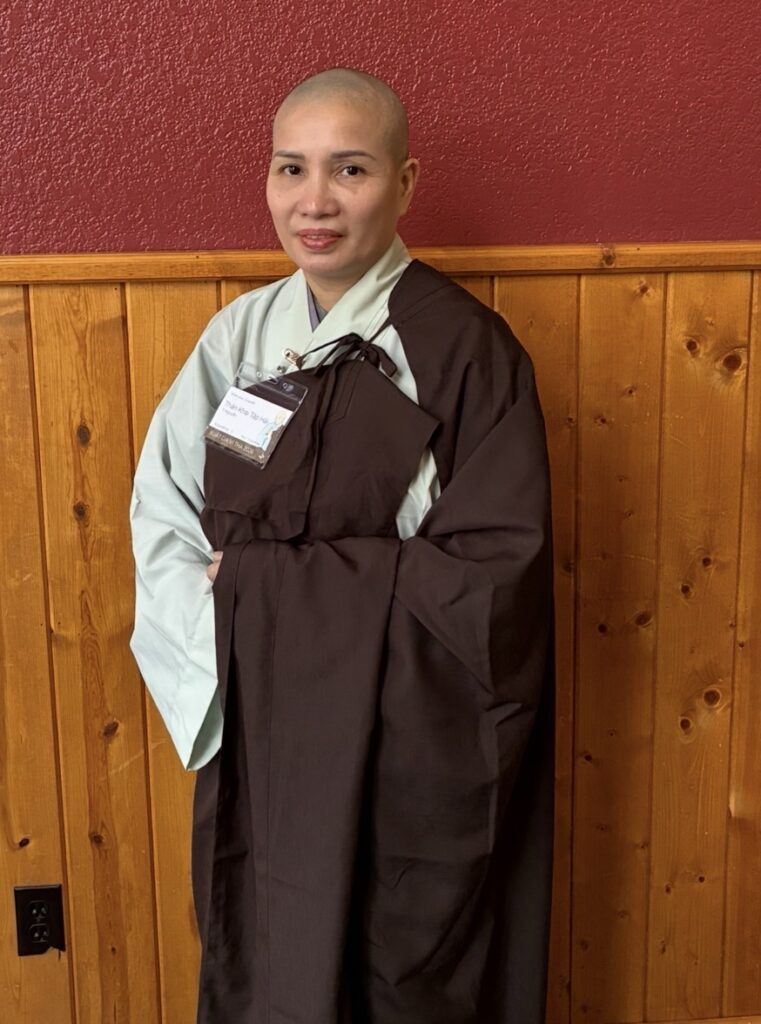
I am Nguyễn Thị Ti, Dharma name Thân Khai Tập Hải. I currently live in the state of Michigan. This year, I had the good fortune to participate in the Altruistic Temporary Home Leaving (Xuất Gia Vị Tha) for the first time. It marked a turning point in my spiritual journey that felt both fresh and transformative. My heart was filled with a blend of joy and deep gratitude for this rare and precious karmic opportunity.
The Cause of My Spiritual Practice
About two years ago, I began to realize how essential spirituality was to my life. Perhaps at some point, everyone must face moments of inner unease or feelings of emptiness—when the things we possess no longer bring genuine peace, and nothing in the external world can fill the void within. From these reflections, I began my path of Buddhist practice, searching for answers to questions I had never encountered before, or had faced but never knew how to answer.
Thanks to the encouragement and wholehearted guidance of Sister Hoàng Vân—a Dharma friend whom I deeply cherish and regard as a source of support on my path—I was introduced to our Teacher and the Avatamsaka Thousand Hands Dharma. From then on, I began practicing the Lotus Bodhisattva teachings consistently, spending more time studying the Buddha’s teachings. I sincerely practiced what I learned, carefully reflected on my Teacher’s online Dharma talks, and gradually integrated these teachings into my daily life.
My understanding of Buddhism is still very limited, and my level of cultivation remains humble. Yet I have always believed that sincerity and perseverance are what truly matter on the path of practice. I place my complete trust in Kwan Shr Yin Bodhisattva, in the teachings of my Teacher, and in the encouragement and support of my fellow practitioners in Michigan. Over the past two years, I have clearly experienced positive changes within myself. I have become gentler, more understanding in the way I treat others, and I continually reflect on my shortcomings to improve myself. Though these changes have been quiet and gradual, they are very real. They have strengthened my confidence in the path of cultivation and in the methods my Teacher has shown us.
Transforming Anger
Among the three poisons the Buddha taught—greed, anger, and delusion—I recognize that anger has been my greatest obstacle, even more than greed or delusion. In the past, I was often quick-tempered and easily irritated. I was not only dissatisfied with external circumstances, but often unhappy with myself as well. Whenever others failed to meet my expectations, or events unfolded differently from what I had hoped for, a strong resistance would immediately arise within me.
My anger often felt like an invisible weight pressing down on my daily life. It robbed me of peace and caused my words and actions to be driven by temporary emotions. Gradually, I realized that beneath my anger lay a deep attachment: I wanted everything to happen according to my wishes. I wanted circumstances to conform to my expectations.
But life unfolds according to causes and conditions. What we want does not always happen, and what we do not want may still come to pass. The gap between our expectations and reality becomes the condition for anger to arise. Through practicing the Four Lotus Dharma, I gradually came to understand that anger is not merely an outward emotional reaction; at a deeper level, it is an expression of attachment to the ego. When the “self” becomes too important, we constantly seek recognition and expect everything to go our way. As a result, the slightest disappointment or unmet expectation immediately gives rise to resentment. In just a single moment, the poisonous wind of anger can sweep away our peace and serenity.
My Teacher taught that the first step in overcoming anger is to expand our hearts through compassion. When we look more deeply, we realize that those who upset us are themselves carrying their own suffering and insecurities. Understanding this allows us to let go of the desire to compete or retaliate, replacing blame with forgiveness and love.
Inspired by these teachings, I have made it a daily practice to recite the Great Compassion Mantra, hoping to cultivate the energy of compassion within myself. I pray that this compassionate energy will gradually soften my rigidity, transform my temper into gentleness, and help me view people and situations with a broader, more open perspective—free from prejudice and narrow-mindedness.
My Daily Sutra
My Teacher’s teachings have opened a completely new way of living for me. As I apply them in daily life, I notice that I have become calmer, a better listener, and much less likely to react impulsively.
Among all the teachings, the one that resonates most deeply with me is the philosophy of the Six “T” Dharma: Lovability – Forgiveness – Letting Go – Flexibility – Openness – Connectedness . And with the Six Easy Dharma: Easy to open / openness – Easy to tolerate – Being nice & lovable – Easy to breathe – Easy to teach – Easy to laugh/being optimistic . These simple teachings have become my daily “sutra,” reminding me each day to live more gently, more generously, and with a more open heart toward everyone around me.
Two years of practice have brought about profound transformations that I once thought were impossible. I had always recognized my mistakes but never knew how to change them. Every time I tried, my old habits would pull me back. Through my Teacher’s guidance, I came to understand that to transform unhealthy habits, we must cultivate wholesome habits strong enough to support us. More importantly, we need a community of like-minded practitioners who encourage and uplift one another. Without these two conditions, the path of cultivation can easily become a journey of “taking one step forward and three steps back.”
Aspiration for Joining the Altruistic Temporary Home Leaving Retreat (XGVT)
The primary reason I joined this year’s Altruistic Temporary Leaving Home Retreat (XGVT) was to dedicate my practice to my mother. My deepest wish is for her to enjoy good health, peace, and abundant blessings. To me, dedicating the merits of my practice to my parents is one of the most profound expressions of filial gratitude.
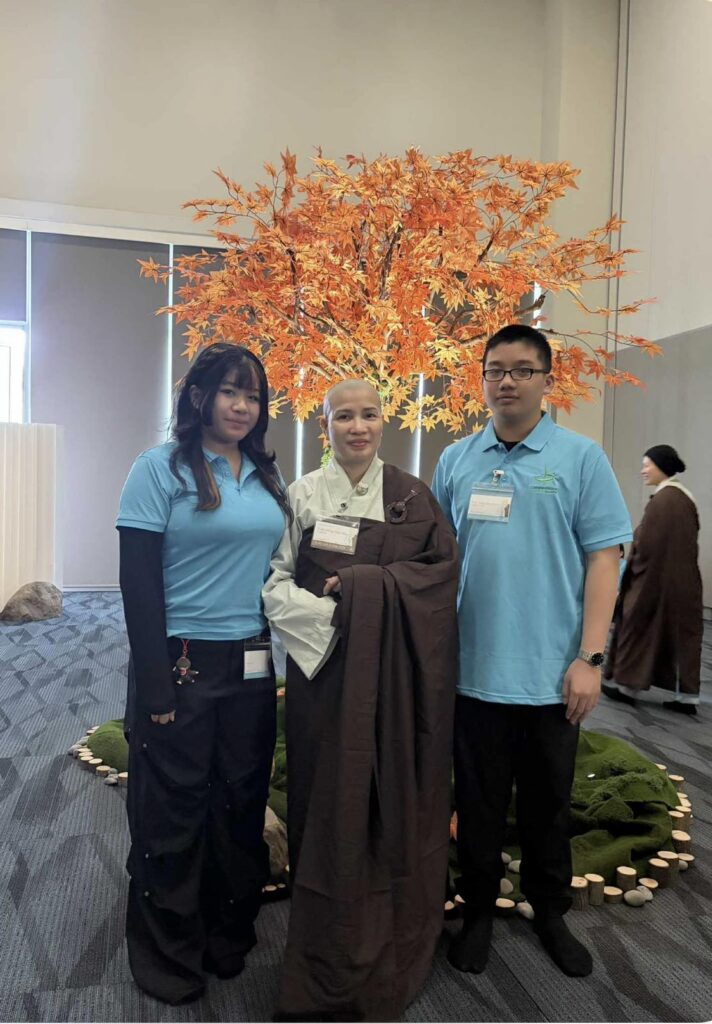
My second reason was my two children. Both are now teenagers—a stage of life when they especially need wholesome ideals and meaningful values to guide their future. Although we live in a society that is highly developed and modern, it often lacks a strong spiritual foundation. For this reason, I signed up both of my children for this year’s Bodhisattva Dharma Protector Program. I hope that through serving and helping others during the retreat, they will cultivate a spirit of volunteerism, learn to live for the benefit of others, and gain an opportunity to experience and appreciate the beautiful values of the Buddha’s teachings. Knowing that I was also attending the retreat gave my children a greater sense of comfort and confidence. I hoped that by witnessing my dedication to practice and my willingness to persevere through challenges, they would be inspired to follow a path of spiritual cultivation and wholesome living themselves.
I have also developed deep admiration for Master’s teaching style. Every Dharma talk is engaging, practical, and well-suited to the needs of modern life. He teaches in both Vietnamese and English, allowing my children to understand much of what is shared. What impressed me most is that he intentionally uses everyday language instead of relying heavily on Buddhist terminology. As a result, beginners like me—and my children as well—can clearly and accurately understand the essence of the Dharma.
My Initial Concerns
As a first-time participant, I carried many worries. I wondered whether my limited practice might negatively affect the community. I questioned whether the disciplined monastic lifestyle would suit someone like me, who had always been accustomed to living independently. I had also never been away from my family for such an extended period. Yet whenever I thought of my mother and my two children, my determination became firm once again. My altruistic aspiration gave me the strength to move beyond every hesitation. Gradually, I realized something profound: when we genuinely do something for the benefit of others, we naturally stop calculating what is best for ourselves. Sincere selflessness becomes a powerful source of inner strength. I believe that when our aspiration is pure, the Buddhas and Bodhisattvas understand our hearts and quietly support us in overcoming difficulties.
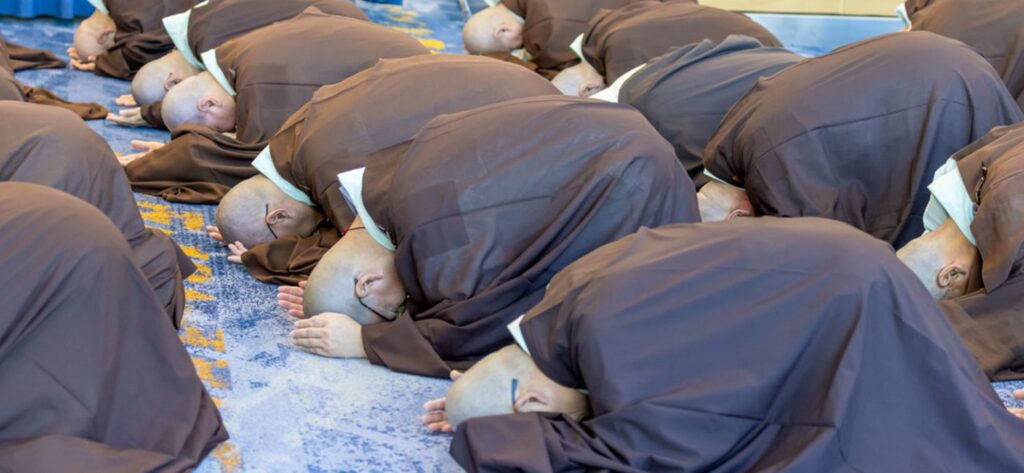
Before arriving, I imagined that the retreat would be physically demanding. But once immersed in monastic life, I discovered that the greatest challenge was not the schedule or the discipline—it was learning to let go of comfort, ego, and long-established habits. Being a monastic for the sake of others requires us to sacrifice, to cultivate patience, and to place the well-being of others above our own comfort. Through this process, I came to understand the true spirit of monastic life much more deeply. One of the most fundamental lessons I received can be summed up in three simple phrases (mottos) of “No Fear”: No fear of hardship – No fear of suffering – No fear of getting stuck. These simple words became guiding principles that helped me remain steadfast throughout my practice.
Happiness in my first XGVT and watching my children serve
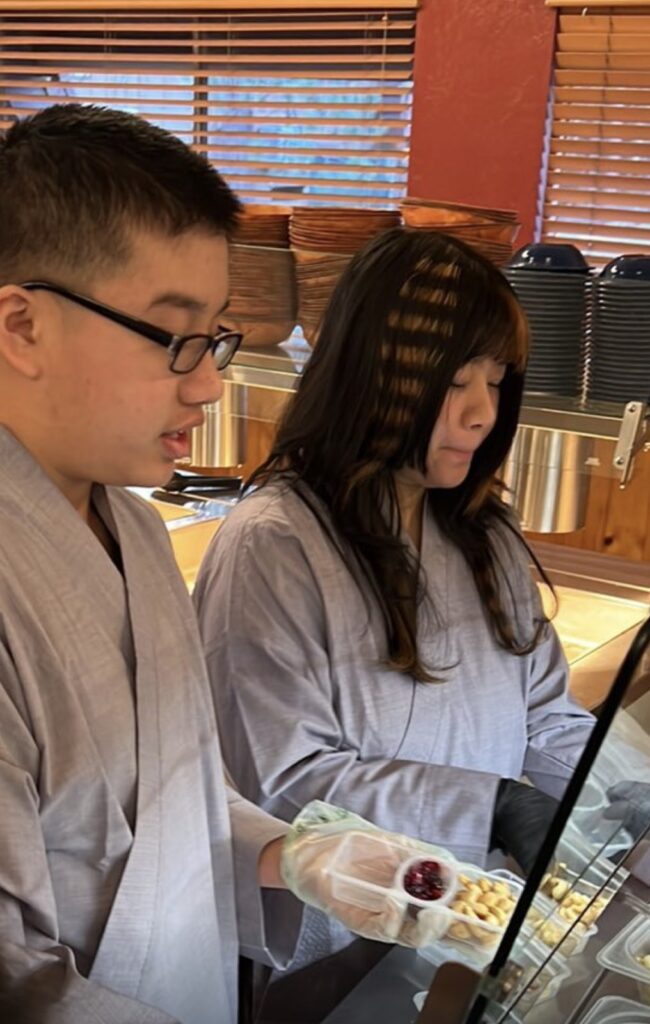
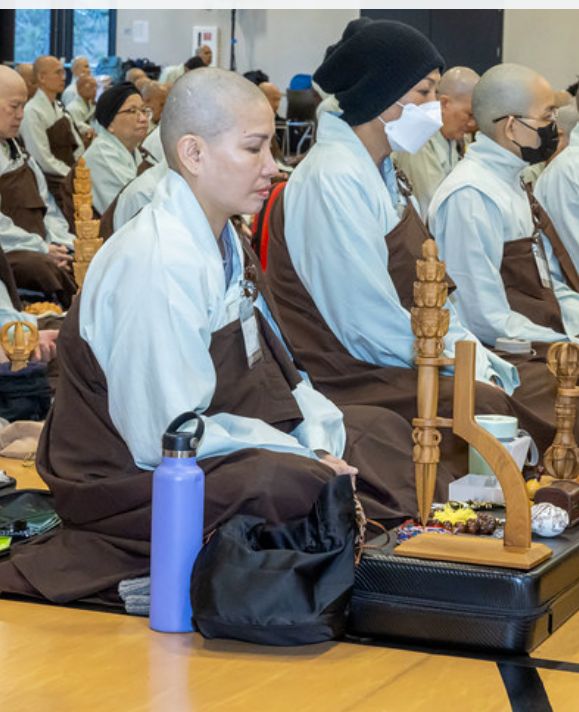
Practicing on Big Bear Mountain opened my heart in many ways. My initial worries gradually disappeared, replaced by a deep sense of peace and happiness. My greatest joy was having the opportunity to study the Dharma directly with Master. The profound teachings of the Avataṃsaka (Huayan) Sutra were presented in clear, relatable language, making them both understandable and practical. The teaching that touched me most concerned the way we live and relate to others. Much of our suffering does not come from external circumstances but from the “knots” within our relationships and within our own minds. Through Master’s guidance, I learned to open my heart, listen more deeply, cultivate empathy, and respond to others with humility. As I changed, my relationships naturally became lighter and more harmonious.
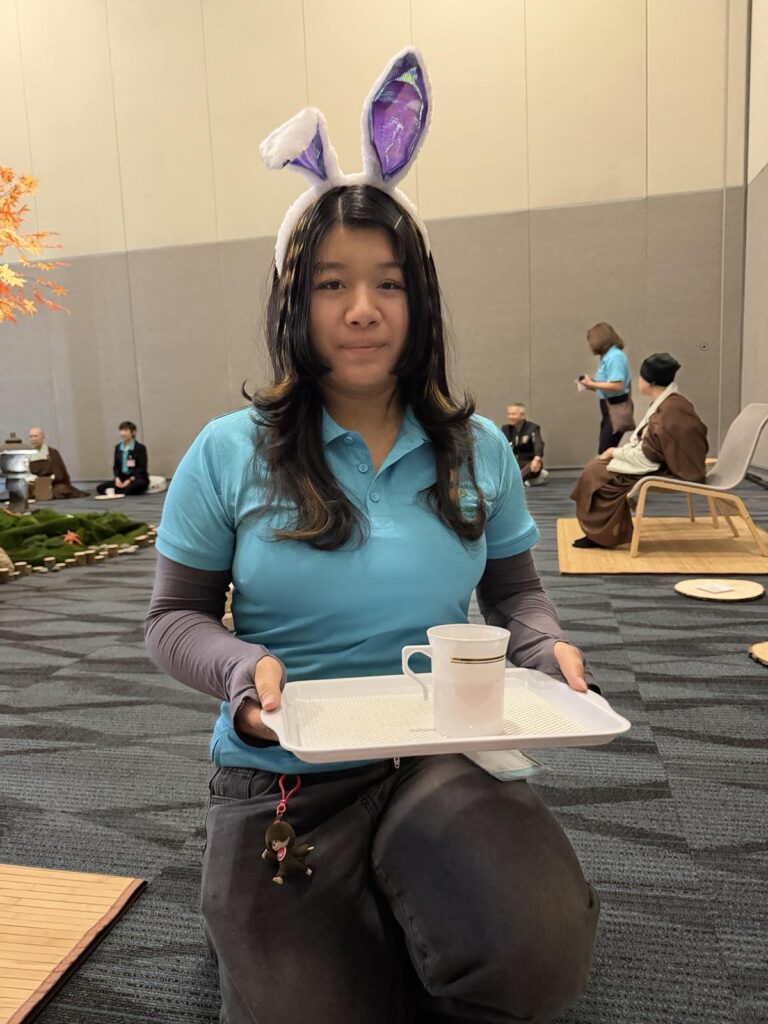
The greatest happiness, however, was witnessing the wholehearted efforts of both of my children throughout the retreat. They eagerly participated in service activities, willingly helped wherever needed, and joyfully integrated into the community. My older daughter, in particular, spent time listening attentively to Master’s Dharma talks and actively participated in answering his questions. Seeing this gave me great confidence that the wholesome seeds of compassion and the Buddha’s teachings were gradually taking root in their hearts.
I sincerely hope that, beginning this year, both of my children will continue returning annually to participate in the Bodhisattva Dharma Protector Program. May this become a beautiful karmic affinity that nurtures their compassion, strengthens their spirit of service, and helps them mature step by step on the path of learning the Dharma, becoming good human beings, and living meaningful lives.
A Message to Those Who Are Still Hesitating
From my own experience, I would like to offer a heartfelt message to anyone who is still uncertain about ordaining and joining the Altruistic Temporary Home Leaving Retreat: If there is already a seed within your heart that longs to practice and to serve others, please do not hesitate. Do not wait until you think you are “good enough” or “diligent enough.” It is only by entering a genuine environment of spiritual practice that we truly begin the process of transformation.
I, too, was filled with doubts. I believed I was not capable enough. Yet because I aspired to dedicate my practice to my mother and to plant wholesome seeds for my children, I prayed for the right conditions to participate in this retreat. Looking back, it was one of the most meaningful decisions of my life. If I were allowed to choose again, I would make the same choice. The greatest gift I received was not merely the experience of living a monastic life for a time. It was gaining a more open heart, a stronger faith in the path of practice, and a life purpose centered on benefiting others.
I truly believe that whenever we give rise to a sincere aspiration, the Buddhas and Bodhisattvas will always support us by providing the conditions needed to walk the path of transformation and service. That is the priceless gift the Altruistic Temporary Home Leaving Retreat has brought into my life.