
By Oanh Vũ / Dharma Name: Thân Cung
Tahquitz in the early mornings of August is truly pristine. Dew still clings to the leaves, sunlight gently touches the distant mountain peaks, and a soft breeze flows through the pine forest and clusters of lavender, carrying a delicate fragrance. After our morning meditation, we practiced a gentle yet profound spiritual exercise—the first lesson Thầy offered in the seven-day retreat: offering compassionate water to the trees.
In front of us were clear glasses of water, each holding a small sprig of evergreen. We dipped our index fingers lightly into the water and wrote the seed syllable SA—the 16th of the 42 Avatamsaka seed syllables, also known as the Great Rain Mantra. In stillness, we closed our eyes, placed our palms together, and chanted the mantra seven times:
Su lu, Su lu, Om Su lu Su lu, Bo la Su lu, Bo la Su lu, Su lu Su lu ye, So po ho.
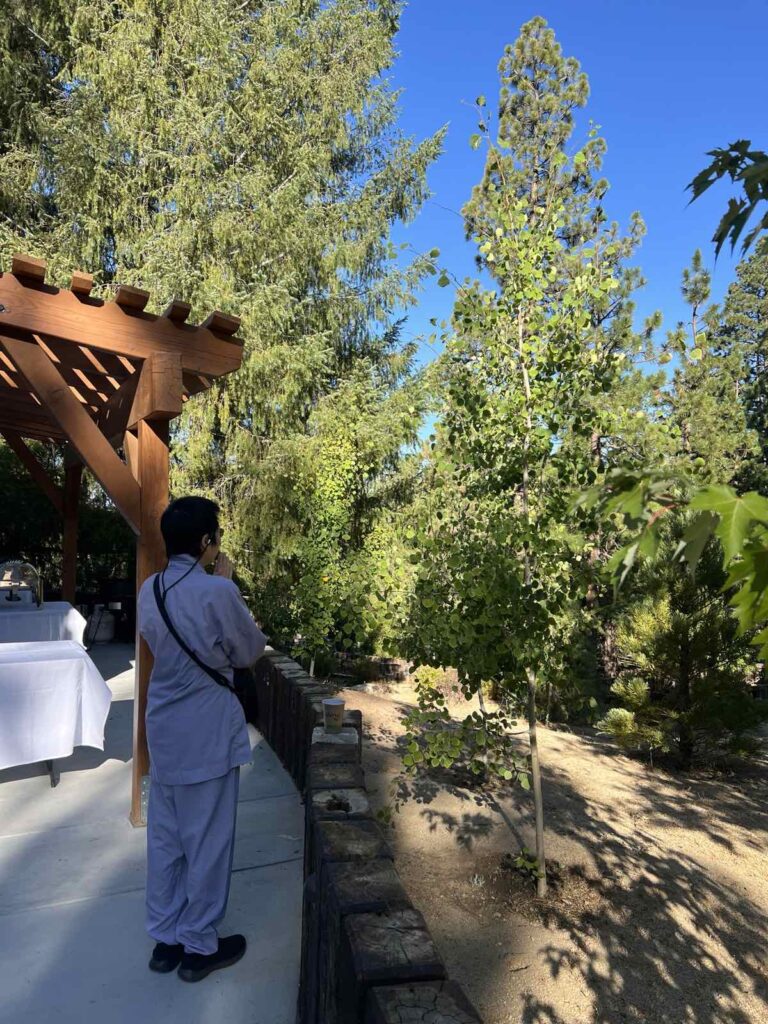
We visualized each drop of water touching our fingers returning to the glass—becoming a stream of pure nectar, carrying healing energy that radiates in all directions.
As we stepped into the forest, we gently sprinkled each drop of water onto the trunks and roots of trees along the path. Each drop fell like the nectar of Quan Si Yin Bodhisattva, carrying love, forgiveness, and equanimity. In our hearts, we offered a prayer: may all the trees and plants here joyfully receive this offering, continue to grow lush and green, and gift the world with shade, fresh air, and vibrant beauty—reflecting the unconditional generosity of the Bodhisattvas.
Each day, we performed this ritual three times, either before or after each meal. It served as a quiet but profound reminder: when receiving a meal—nourishment from the earth and all living beings—we should also give back, offering something to the life around us. And here, that simple gift was a drop of water, infused with deep gratitude and loving-kindness.
The Sacredness and Intelligence of the Forest

One afternoon, Thầy led us on a walk through the forest to observe the trees. Along the way, he and our fellow practitioners shared stories about the sacredness, sensitivity, and wisdom of the trees they had encountered in places they had lived or visited.
We learned that the forest is a vibrant and intelligent community. Through underground networks of roots and fungi, trees can connect, communicate, and nourish one another. Scientists call this network the “Wood Wide Web”—a hidden information system, like the internet of the forest. When a tree is in danger, signals are sent so the entire forest can respond and protect its species. Mother trees can even transfer nutrients to young saplings growing in the shade, offering silent protection.
Thầy also reminded us of the fallen logs—trees that have collapsed or dried out, seemingly lifeless and useless, yet still quietly performing their sacred duty: returning nutrients to the soil, providing shelter for small creatures, and becoming an essential part of the cycle of life. Even in death, the tree continues to offer itself to life.
He advised us: do your best not to cut down or destroy trees or forests. If it must be done, do so with sincerity—ask permission, offer prayers, and seek understanding from the tree, as well as from the spirits and deities that dwell within it. At the same time, sow new seeds elsewhere, plant more trees around your home or wherever possible, so that life may continue to flourish.
That story helped us realize: trees are not silent wooden beings, but a community that knows how to connect, give, and love—like a great family of nature.
The Virtue of Trees – The Virtue of Bodhisattvas
Walking through the forest in the morning, the air was cool and fresh. But by noon, the sun grew harsh and dry, and we felt the intensity of nature’s extremes. In that moment, the shade of the trees became incredibly precious.
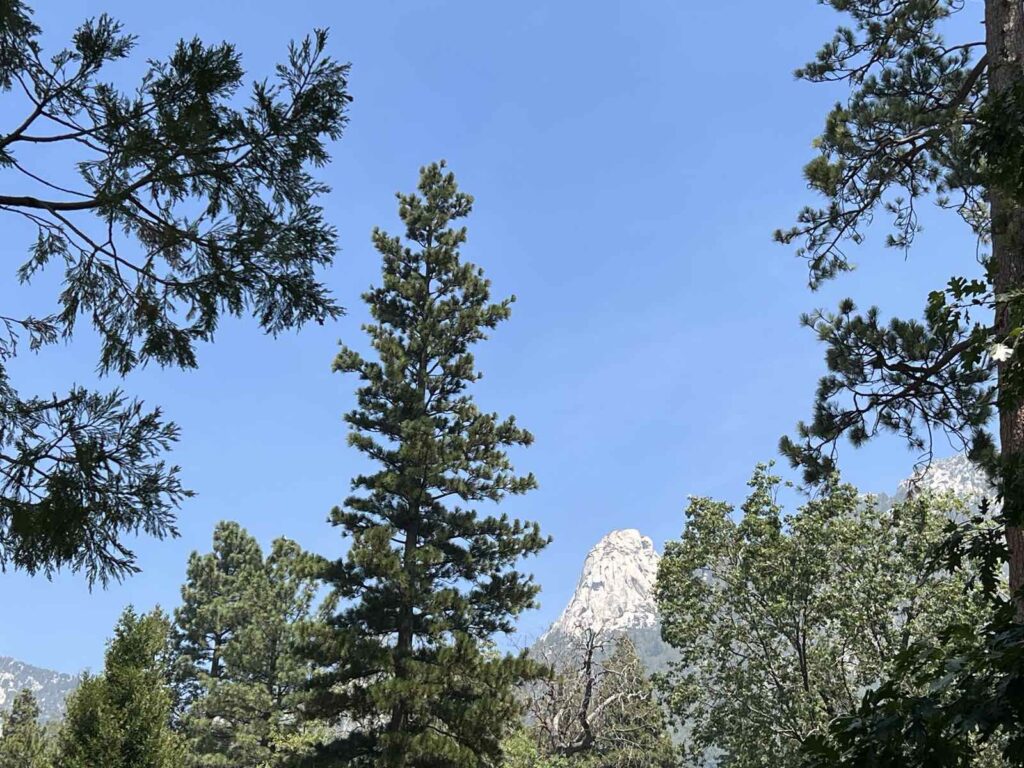
Sitting beneath the towering pines or resting under the broad shade of an oak, we felt the protective embrace of nature. The oak tree may appear unruly, not as straight or majestic as the pine, but its shade spreads wide, cooling the space around it. The temperature dropped noticeably, and the heat eased. Thầy said: Bodhisattvas are like that too—simple and humble like the oak tree—not flashy, but offering vast protection. The virtue of the tree is the virtue of the Bodhisattva: silently giving, quietly sheltering all beings.
Gazing at a Tree – Seeing the Stream of Life
When offering water in devotion, we don’t distinguish between tall or short, big or small trees. But if we look deeply, ancient trees reveal profound lessons. A human life, at most, lasts a hundred years. Yet trees have stood for hundreds, even thousands of years—quietly witnessing countless changes, enduring storms, cold winds, sun, and rain.
One breath out, without another drawn in, marks the end of a life. But the stream of life continues to flow. Majestic trees remind us that our presence today is just a fleeting slice—a single “slide” in the vast film of existence. What we see in this moment is not the whole, but merely a tiny fragment of a long unfolding process. If we pause for a moment and look deeply, we may glimpse the hidden journey behind it all.
Life is much the same. When we see someone act unkindly or speak harshly in a moment of pain, let us not rush to judge. That moment is just a slice—we cannot know the countless causes and conditions that led to it. Sometimes, even a small trigger can awaken a tangled web of karmic ties from many lifetimes, igniting a fire of anger that burns down a forest of accumulated virtue.
Human life is brief, and a narrow view—seeing only the surface—leaves us without the depth or wisdom to perceive the full arc of karma. But ancient trees, standing tall through generations, seem to have witnessed it all. In contemplating them, we learn to see the whole journey. And in seeing the journey, our gaze softens. We become more patient, more compassionate, more forgiving—lifting one another gently along the path of practice.
Then, we no longer see only faults and flaws, but also the beauty and light within each person—shining like the radiance of the true self. That light, like the sun, has never ceased to shine. It’s only that, at times, clouds of selfishness, envy, and rivalry drift across, making us mistake the sky for darkness.
A Prayer Before the Green Forest
These stories and teachings made us cherish each drop of water we offered even more—especially in recent years, as wildfires have repeatedly ravaged forests, claiming the lives of animals and destroying homes and property—particularly in California, where losses occur almost every year.
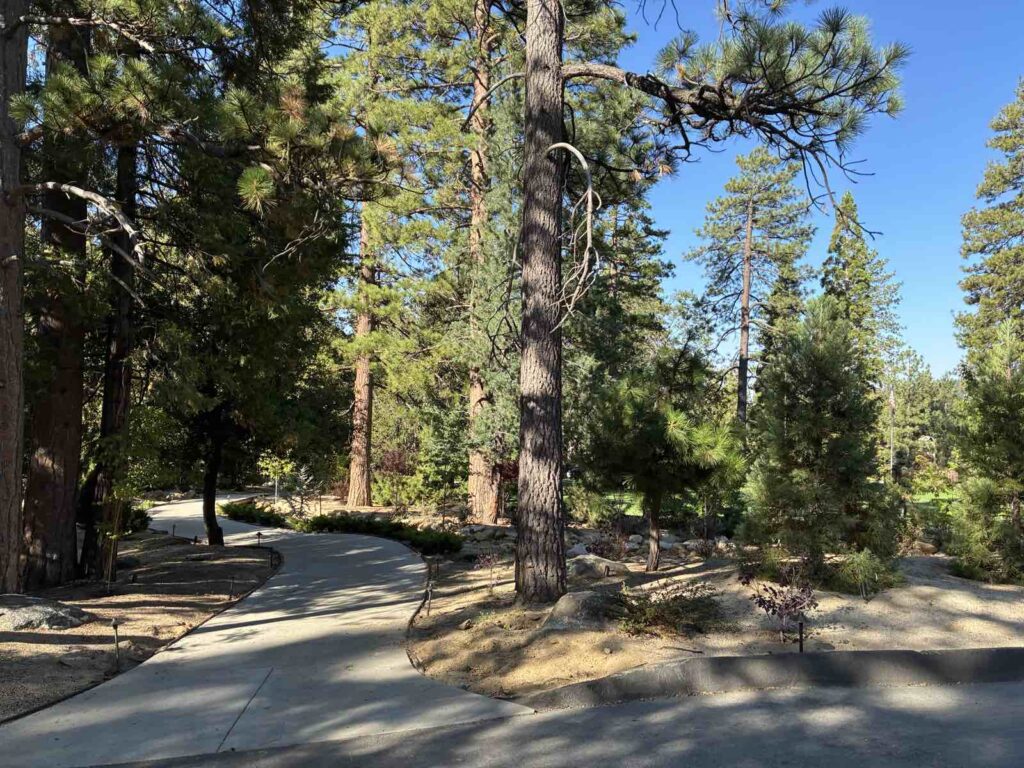
Therefore, as we sprinkled each drop of nectar under the blessing of Quan Si Yin Bodhisattva, we not only dedicated it to the forest of Tahquitz, but also prayed that these drops would multiply and spread across the San Bernardino Mountains, throughout all forests in California, and to every green forest around the world—so that all may be nourished by this pure water, overcome drought and fire, and continue to offer life.
A week passed, and our footsteps marked the small trail through the forest. The rustling leaves in the wind felt like nature’s gentle response. We realized that we, too, had been refreshed. Each drop of water, each mantra, and each touch of leaf to breeze—had become a bridge connecting our hearts to the breath of the forest, making every moment a gesture of gratitude and a gift to life.
And so, we told ourselves: when we leave Tahquitz, we will not only carry the memory of the forest, but also hold in our hearts the spirit of this practice. Wherever we are—a city park or a small garden in front of our home—we can still offer compassionate water. Because when we give a drop of water with a pure heart, we are planting a seed of love and gratitude into the world.
We thank Thầy for giving us a lesson and a practice so simple, yet profoundly deep—nurturing compassion and gratitude for all.