Category: Blogging

  • Temporary Home Leaving for Compassion and Altruism

    Temporary Home Leaving for Compassion and Altruism

    Mai Beck / Thân Mai

    I have joined the Altruistic Home Leaving Sangha three times, the first in 2008 when a close friend fell gravely ill. At that time, I had just encountered the teachings of Thầy Hằng Trường and realized this was the Dharma I had long been searching for. Although I already had deep faith in Buddhism, I still did not know how to apply the Buddha’s teachings to daily life.

    Beginning with Thầy’s lectures on the philosophy of the Five T’s and Five R’s, or 5 Domain of Practices and 4 Levels of  Consciousness, it was a completely new door opened for me in understanding and practicing the Dharma. The philosophy of “Transcending Worldliness-Engaging with the World” came like a fresh breeze—pure, new, and awakening. It became a guiding compass, showing me a concrete, practical path of practice that could be walked immediately in everyday life.

    One day, I heard Thầy speak about the Altruistic Temporary Home Leaving program—a noble vow where one ordains and practices on behalf of those who are sick and suffering. Without hesitation, I vowed to ordain in place of my friend who was facing danger, hoping this would create merit and conditions to help him overcome his crisis.

    At that time, the sangha had only a few members. We practiced on a mountain in China. I no longer remember the mountain’s name, but the strict discipline of practice, together with the quiet forest scenery, brought me back to the image of ancient monks—simple, pure, and detached from the noisy world.

    The Moment of Shaving the Head

    The first time Thầy shaved my head was a sacred experience I still remember as if it were yesterday. Though I had prepared mentally, when the locks of hair truly fell, my heart rose with a tender, indescribable lightness. I knew it was the joy of letting go, not confusion or regret.

    I realized I had overcome attachment to form faster than I imagined. And recalling the noble meaning of altruism, my heart was filled with love and excitement directed toward my sick friend.

    A miracle happened: that friend later recovered completely. For me, this was not mysticism, but the result of faith, merit, and the pure energy of an altruistic heart.

    Deep Faith in the Buddha Dharma

    This experience strengthened my deep faith in Buddhism, in the Bodhisattva path taught in the Avatamsaka Sutra, and in the practice of serving others that Thầy continually emphasized.

    When the mind is directed toward the benefit of sentient beings, wholesome energy can transform suffering and bring peace in ways human reasoning cannot explain.

    Looking back on my first ordination and the ones after, I realize my spiritual path has changed greatly. These changes were cultivated in the spirit of altruism during the retreat, together with the Dharma I have studied for more than ten years.

    At the core of everything is the motivation for practice. Why do I become a temporary Buddhist nun? Why do I revere Thầy’s teachings? Before, I had no clear answer. But now everything is clear: it is compassion and altruism.

    It is compassion that moved me to ordain. It is altruism that helped me absorb the Dharma deeply and understand the path Thầy guided. Thanks to these elements, practice became alive, meaningful, and full of transformative energy.

    From a Contracted “Self” to an Open Heart

    Losing my parents at a young age, I grew up in loneliness and constant fear of the future. At times, the sorrow was so great it robbed life of joy and meaning. As I matured and walked the spiritual path, I realized many people were more unfortunate than I, yet they still lived positively. That urged me to strive harder in learning the Dharma.

    Through practice, I gradually realized: when the mind circles around a heavy “self,” life becomes cramped and gloomy. When the mind turns outward, thinking of those who need us, the heart naturally opens.

    This is the spirit of “Transcending Worldliness- Engaging the World”, we must experience the inner peace of one’s own mind, while also engaging in life with a larger heart.

    That Dharma changed me. I no longer only clung to my own suffering. I learned to live for others, even though I am not a skillful practitioner or deeply knowledgeable like many fellow practitioners.

    Whoever needs prayer, I pray. After each session, I dedicate the merit. And strangely, I immediately feel joy from this act of “giving.”

    In the past, I only wished to be loved and understood, but the more I wished, the more disappointed I became. Now, I only wish to give—a prayer, a concern, a peaceful energy—and joy naturally arises.

    From this I understood that altruistic ordination is not something distant. It is simply sacrificing a part of oneself to bring peace to others.

    An Unforgettable Sangha Retreat Memory

    During my first ordination, I was slow, clumsy, and hardly knew anyone in the sangha. Yet in that situation, a profound memory imprinted itself in my heart for more than ten years.

    That day it rained. I had no umbrella, no raincoat, so I just stood there getting wet. Suddenly, from afar, a sister in the sangha—later I learned her name was Hạnh Lê—hurried toward me, holding an umbrella. She gently took my hand and sheltered us both.

    Just a small action, but for me, it was a great gift. Her gentle eyes, warm smile, and sincere care made me feel a tender yet profound love, like that of a sister.

    That is the spirit of altruistic ordination—opening hearts, supporting, and loving one another in a shared soul. That memory nourished me for many years, becoming a source of inspiration on the path of practice and service.

    Ten Days of Practice Filling the “Spiritual Vessel”

    Though the retreat lasted only ten short days, every lecture and method Thầy taught was a lifelong lesson—brought home and applied daily, immensely beneficial.

    I always remember Thầy’s words: Practicing the Bodhisattva path means never ceasing to evolve, never ceasing to open the heart, never ceasing to serve, never ceasing to benefit others.

    I often liken the ten days of altruistic ordination to a pump filling my “spiritual vessel.” No matter how empty the vessel was, those ten days filled it again.

    And it is precisely those cherished memories—like Dharma Sister Hạnh Lê’s umbrella—that made me understand that in the most ordinary moments, we can recognize the extraordinary.

    That enlightenment does not only come from distant saints, but can also manifest in ordinary, close people around us.

  • A Journey of Faith and Devotion

    A Journey of Faith and Devotion

    By Mai Tran Nguyen (Dharma Name: Thân Mỹ Ngạn)
    Question: Could you please tell us a little about yourself?

    Mai Trân: My name is Nguyễn Mai Trân. I’m 75 years old and live in North Carolina. Since childhood, I have been closely connected with Buddhism and often went to the temple. The abbot was very kind and guided me in chanting sutras. From then on, the sound of the bell and the wooden fish became familiar, and my faith in the Three Jewels deepened. That faith has nourished my spiritual life throughout the years.

    Question: How did you come to study the Dharma with Thầy Hằng Trường?

    Mai Trân: It was a very special karmic connection. I had never even heard of the Thầy before. One day, a friend invited me to a meditation class with Thầy Thông Triệt. After the session, someone asked, “Are you studying with Venerable Hang Truong?” I was puzzled—I didn’t know who that was.

    A few days later, a friend sent my husband a poem titled “Can Khon Thap Linh Exercises” that mentioned Thầy Hằng Trường. I read it and was immediately drawn in, so I went online to listen to his teachings.

    From the very first talk, I was captivated—especially by how the Thầy intertwined Journey to the West with Buddhist history, explaining each part with wisdom and compassion. His extraordinary memory, engaging storytelling, and profound insight helped me understand the path of practice more deeply.

    From that day on, my husband and I listened to his Khai Tam program every night for hours. Those teachings became a guiding light, opening in me a new awareness of the Dharma. Before, I thought spiritual practice meant simply living kindly, keeping faith, and avoiding bad karma. But now I understand that true cultivation is the evolution of consciousness—nurturing the beauty within oneself and recognizing the beauty in others.

    Later, I watched a video of the Venerable teaching the Great Compassion Mantra in San Jose. He said, “Whoever wishes to study with me should vow to recite the Great Compassion Mantra 100,000 times.” I made that vow and chanted every day—sometimes while doing housework.

    My husband lovingly told me, “Just keep chanting. I’ll take care of the house and the cooking.” In 2015 after 18 months, I completed all 100,000 recitations.

    Then, my husband and I began practicing “Can Khon Thap Linh together for several years, and our health improved significantly. When I heard about the Temporary Home Leaving (XGVT) program, I was determined to participate. I told my husband, “I’m going to be a nun!” He laughed, “You’ll have to shave your head—that’s strange!” I replied, “What’s strange about that?”

    Question: So you actually shaved your head and ordained?

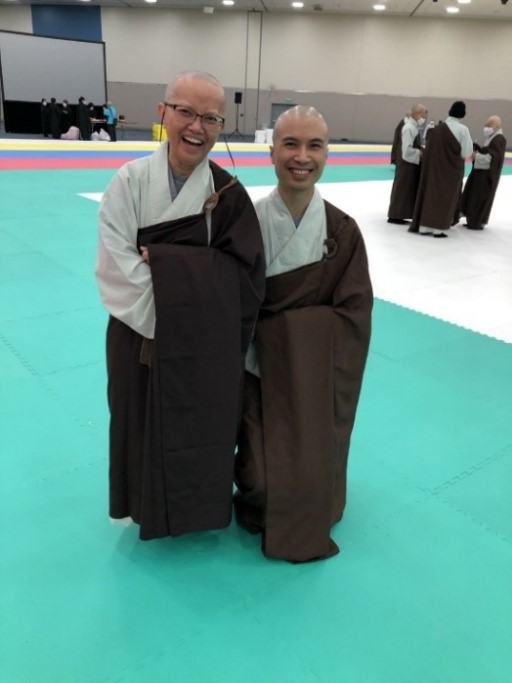
    Mai Trân: Yes, I did—in 2014. It was my first time joining the ordination program. I didn’t know anyone there, but I wasn’t nervous at all. The day I shaved my head was also the first time I met the Thầy in person. I said, “I have studied meditation with Thầy Thông Triệt and took refuge with Thầy Thích Tâm Châu for many years, but today I’m deeply happy to be ordained by you.”

    He looked at me quietly, his eyes full of compassion and understanding. In that moment, I felt a gentle peace spread through me, and tears began to fall. He shaved my head and gave me the Dharma name Thân Mỹ Ngạn, meaning “Beautiful Shore.” He said, “Cultivate diligently so you can help your parents cross to the other shore.”

    At that time, I didn’t fully understand his words. It wasn’t until ten years later, when I read the Heart Sutra and came across the verse “Gate gate pāragate pārasaṃgate bodhi svāhā”—“Gone, gone, gone beyond, gone completely beyond, enlightenment, hail!”—that I finally understood. Thầy had seen my heart’s aspiration long before I did.

    Question: Do you have a particularly moving memory from your practice?

    Mai Trân: Yes. Each time I hear Thầy chant the line “Om Si Dan Do Man Do La Ba To Ye So Po Ho” . I can’t help but cry. I don’t know why—my heart just melts into the sacred vibration of the mantra. Perhaps, in the most divine moments, tears are the purest language of the heart.

    Question: How many times have you ordained?

    Mai Trân: Three times. The first was in 2014, but afterward I stayed home to care for my grandchildren. The second was in 2018, and again I had family duties. Finally, in 2024, I was able to return.

    Once, Thầy said, “If you cannot attend a retreat, make a vow to perform 100 bows each day.” So I followed his guidance and did 100 bows a day for 1 month, 30 days is 3000 bows, dedicating the merit to my loved ones. Even when I couldn’t attend in person, I maintained my devotion through each bow and each breath.

    Question : It seems your family is very supportive of your spiritual path.

    Mai Trân: Yes, that is a great blessing. My husband has a sincere spiritual heart. He deeply respects the Thầy’s teachings and especially enjoys studying the Avatamsaka Sutra (Flower Ornament Sutra). He has memorized several chapters—The Chapter of the Virtuous LeaderThe Ten AbodesThe Ten Practices, and even the Surangama Mantra. But he always says, “I’ll just practice at home—I don’t have the good deeds to be a monk.”

    I remember back in 2020 when the COVID pandemic was spreading across the world, the Master called on everyone to bow to the Buddha in prayer. He urged people to perform 100 bows each day for a whole month, dedicating the merit to those who were ill, living in fear, or had just passed away due to the pandemic. My husband immediately made a vow to follow the Master’s guidance and completed 3,000 bows that month. As for me, I was inspired to perform 10,000 bows over the course of two months

    Our children were born and raised in the U.S. So at first, they didn’t understand much about spirituality. They worried because I seemed to change so much—my diet, my daily habits, even my circle of friends. One of them asked, “Mom, are you in a cult?” I gently explained and showed them photos of my ordination. Since then, they’ve understood and respected my practice.

    Now my daughter even says, “Mom, please pray to Guan Yin for me.” When I hear that, I know that faith has begun to take root in her heart.

    Question: What would you like to say to those who wish to ordain but still hesitate?

    Mai Trân: Ordination is a matter of karmic affinity. But from my own experience, I can only say this: if you have the opportunity, don’t hesitate—join the Temporary Home Leaving program. It will change your life forever.

    Many people wonder why someone would give up everything to ordain. They think it’s too big a decision, too difficult a step. But truly, it’s not hard at all. Fears about shaving your head, leaving family, or living among strangers—those are just attachments, shadows of the mind. Once you let them go, your heart becomes as light as a cloud, and the path of practice opens before you—radiant, peaceful, and full of light.

  • The Journey of Altruistic Ordination – Beginning with a Seat

    The Journey of Altruistic Ordination – Beginning with a Seat

    By Phan Thanh Tùng / Dharma Name: Thân Minh Tùng

    Beginning with a Seat

    Ordaining has never been easy for me—not because of inner obstacles, but due to physical challenges. I have a rather large body, which brings difficulties that those with a more balanced physique rarely face. Although I deeply love the “Altruistic Ordination” program, I had to wait for the opportunity to meet Thầy and share my personal circumstances.

    To be honest, I couldn’t sit on the ground—not out of fear of leg pain or backaches, but simply because of my size. When I explained this, Thầy compassionately allowed me to sit on a chair throughout the retreat. During the first Altruistic Ordination retreat at Joshua Tree, I, along with a few fellow practitioners, was permitted to sit on chairs instead of the ground.

    Without Thầy’s compassion and generosity, I might never have fulfilled my aspiration to ordain in this lifetime. I am deeply grateful—for his understanding and profound kindness—which created the opportunity for me and other elders who struggle to sit on the ground to attend the annual Altruistic Ordination retreat.

    From Hearing the Dharma to Absorbing It

    Each retreat marks a transformative step on my spiritual path. I recall the meditation sessions where I struggled to focus due to wandering thoughts. The profound teachings of the Avataṃsaka Hand-Eye Dharma were beyond my grasp. The chanting rituals and mantra recitations felt unfamiliar. After each retreat, I often couldn’t recall the practices clearly.

    Yet my faith in Thầy’s Dharma and in the Buddha’s teachings remains deep. I believe that with sincerity and devotion, even unfamiliar teachings will gradually seep into my consciousness—like radiant seeds of light that were once vague shadows, now becoming clearer through recent retreats.

    Especially last year, I felt a distinct transformation—the teachings began to penetrate my heart. Perhaps I’ve moved beyond the beginner’s stage? But truly, it’s thanks to Thầy’s clear, methodical, step-by-step guidance—from theory to practice—that I’ve been able to continue applying the Dharma after the retreat. The practice charts, in particular, help me reflect on my progress: am I practicing correctly? Am I improving?

    Community as Refuge

    I live in Montreal, Canada, and would like to share a bit about our local CSS Sangha, guided by Sister Bạch Huệ. Thanks to fellow practitioners, daily practice has become a habit.

    Every morning at 5:30, we gather for group meditation. In the evenings, we meet again—sometimes for meditation, sometimes to review Thầy’s teachings or lessons from the “Altruistic Ordination” program.

    This steady rhythm nurtures both spiritual growth and community connection. Though the retreat lasts only about 10 days, we devote our full energy and time to practice. It serves as a springboard to ascend another rung on the spiritual ladder. Yet when returning to worldly life, it’s essential to have a community of Dharma friends to rely on, support, and uplift one another—so our practice doesn’t regress.

    A Sacred Moment Inside the Mandala

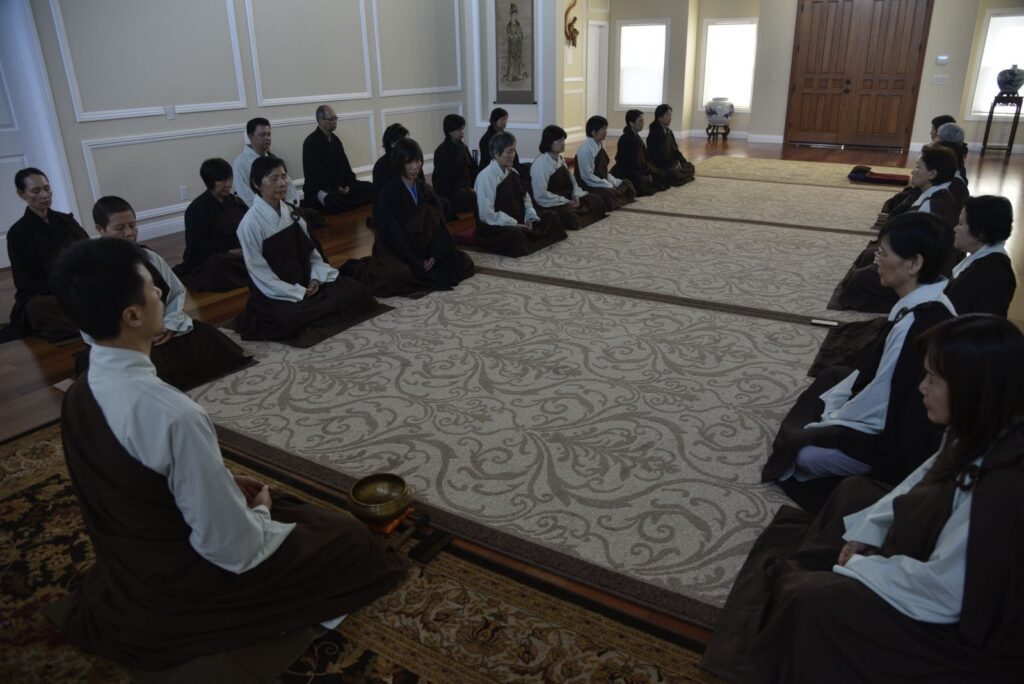
    As you know, the Altruistic Ordination program always concludes with the Mandala Ceremony—solemn and magnificent. One of the retreat’s main purposes is to prepare the Sangha with enough spiritual strength to enter the Mandala. We exercised daily to build physical energy, practiced mantra recitation and seated meditation to refine visualization energy and deepen concentration.

    Yet for many years, I had never sat inside the Mandala circle—because I needed a chair. Until last year, when the organizers made a skillful adjustment: they arranged rows of chairs inside the Mandala. Thanks to this inspired initiative, I and many others could fully immerse ourselves in the sacred atmosphere of the closing ceremony.

    Indeed, sitting outside the Mandala circle, I still participated in the ceremony and applied all the training from the mountain. But I felt I hadn’t truly merged with the mystical energy of the Mandala—it seemed to brush only the surface of my skin. Only when I sat inside the circle last year did I truly feel the depth and wonder of this Dharma. That energy seemed to penetrate my flesh, enter my organs, and awaken my small consciousness—allowing me to merge with the sacred, transcendent spirit of the Mandala ceremony.

    From Businessman to Cultivator

    Before embarking on the spiritual path, I was a businessman, running a company and bearing many responsibilities. The pressure drained joy from my life. I saw no way out of the hustle and bustle. My spirit felt empty, my soul stifled.

    But after meeting Thầy and practicing his Dharma, I realized the philosophy of “leaving the world to enter it” was profoundly wise and practical. I saw a way out of my weary life. The Avataṃsaka teachings captivated me from the start. Leaving the world helped me see my blind spots; entering it allowed me to help others. This philosophy opened a new horizon I had longed for. Every day, I spent time listening and reflecting on all of Thầy’s talks on Khai Tâm TV and radio—never missing a single one. Gradually, I absorbed and understood the Avataṃsaka Hand-Eye Dharma—a deep spiritual path that truly evolved my soul.

    I took refuge with Thầy, and just one year later, I officially ordained. Since then, I’ve attended every retreat without interruption. As mentioned earlier, I’m a large person—before practicing, I wore size 42. Now I’ve slimmed down to size 36. This isn’t just a physical change, but a sign of transformation in old habits—from eating and sleeping to family life and healthy living. Life has become more relaxed, my spirit more joyful, and my health more stable. This reflects the holistic path of practice in Thầy’s Dharma, which I deeply cherish.

    Helping Others Through Small Acts

    I believe that if we truly understand the spirit of “Altruistic Ordination,” nothing is impossible. Practice is a journey of effort and sincerity. With sincerity, we overcome spiritual challenges, knowing that our practice isn’t just for ourselves—but for others who need merit and our dedication. With effort, the disciplined, simple life of a monastic is no longer an obstacle.

    Helping others is also a key factor—a motivation to open the altruistic heart. In the Montreal group, I don’t do grand things, but I always try to support others in small ways, like tracking cheap flights or finding suitable hotels. Whenever I do something beneficial for others, I feel joy spreading within, and my spiritual path becomes more meaningful.

    A Heartfelt Gratitude

    Ordaining for others is a noble practice, and each of us can do it. For me, it’s a path of serving others—and I only hope to carry out this work within my humble capacity, both during the retreat and in daily life.

    In every retreat, I strive in every moment, knowing that receiving the precepts and wearing the robes of a novice monk is a rare and precious karmic opportunity. I close this sharing with deep gratitude to Thầy, to the Buddhas and Bodhisattvas. Thầy’s generosity and the boundless compassion of the Buddhas and Bodhisattvas have given me the strength and capacity to continue practicing and ordaining each year.

  • “The Altruistic Ordination Journey”

    “The Altruistic Ordination Journey”

    Quế Trang / Thân Khai Niệm

    A Spiritual Turning Point in April

    This past April, a turning point unfolded in my spiritual life. I made the vow to enter the path of altruistic monasticism.

    Looking back, when the aspiration to ordain first arose in the quiet months before, my heart surged with an indescribable emotion. At last, I had the chance to repay the boundless kindness of my grandmother, who raised me from childhood to adulthood. But this vow was also a call from within — the echo of over ten years walking in the footsteps of my Teacher, studying the Dharma. The time had come to embody the teachings more deeply.

    For more than a decade, the conditions for ordination had not yet ripened. I could only offer my efforts in the role of a Dharma Protector Bodhisattva, wholeheartedly serving those who had already entered the monastic path. Yet deep within, I quietly cherished the dream: that one day, I might don the simple blue robe, shave my head, and truly step into the life of a monastic.

    And then, one day this past April, a wholesome condition arrived — and that long-held dream came true.

    First Time Shaving My Head

    On the first day of shaving my head, as each strand of hair fell away, I felt as though a small chapter of my life was being released. With every hair leaving my scalp, a part of my soul quietly opened.

    In that moment, I thought of my grandmother.

    People often cherish their hair as a symbol of outer beauty — and I was no different. But today, I found myself letting go of the hair I once treasured, with surprising ease. I simply wanted to offer it as a gift of filial gratitude to my grandmother — simple, yet filled with love.

    The feeling was hard to describe: both light and sacred. I sensed a cool stream flowing through my heart, washing away the longing and attachment I once held for my hair.

    The Joy of Letting Go

    In the past, as a Dharma Protector, I found joy in quietly supporting the monastic community from behind the scenes. But it wasn’t until I shaved my own head that I truly understood the happiness of letting go.

    People often chase after food, clothing, status, and competition. Yet in the moment my hair fell away, I felt my heart open wide like the sky. That joy didn’t come from gaining something new, but from gently releasing something old — letting go of attachment to outer appearance, and the fear of losing the hair I once cherished.

    In that moment, I realized: there is a kind of filial piety that doesn’t come from fine meals or warm words, but from offering one’s entire spiritual life to a loved one. And that is the gift I wish to offer my grandmother.

    A Message to You

    If one day you still have the health and the wholesome conditions, I hope you’ll try living with the monastic Sangha — just once. Ten days is enough. Enough to taste a different rhythm of life — quieter, deeper, and more selfless.

    At first, you might hesitate: because of your hair, because of the discipline, or simply because communal living feels unfamiliar. But allow yourself to let go, just once — and you may discover that your true heart has never been bound by appearances. What matters is not whether your hair remains or falls, but whether you find a Teacher, a Sangha, a place to lean on and grow in the Dharma.

    The Final Lesson

    That retreat left me with a profound lesson: I no longer live just for myself, but for the community — for others. When the heart turns toward others, the path of practice becomes light and unobstructed.

    For ten days, I had only one task: to practice. Each chant, each prostration, each mantra slowly seeped into my being, revealing how hurriedly I had been living — without pausing to truly reflect. I remember my Teacher’s words: “The simplest thing is to always think of others.” But for that teaching to become a living current, we must immerse ourselves in the life of the Sangha. Only through interbeing — lifting one another up — can we truly taste the sweetness.

    If we practice alone at home, no matter how many sutras we read, the mind can still bump against the narrow walls of ego. But when we live within the Sangha, faith becomes a firm root, the soul is nourished, and love expands in all directions. That is the path that brings us back to a life of depth, serenity, and awakened presence.

  • A Drop of Compassionate Water in the Forest of Tahquitz

    A Drop of Compassionate Water in the Forest of Tahquitz

    By Oanh Vũ / Dharma Name: Thân Cung

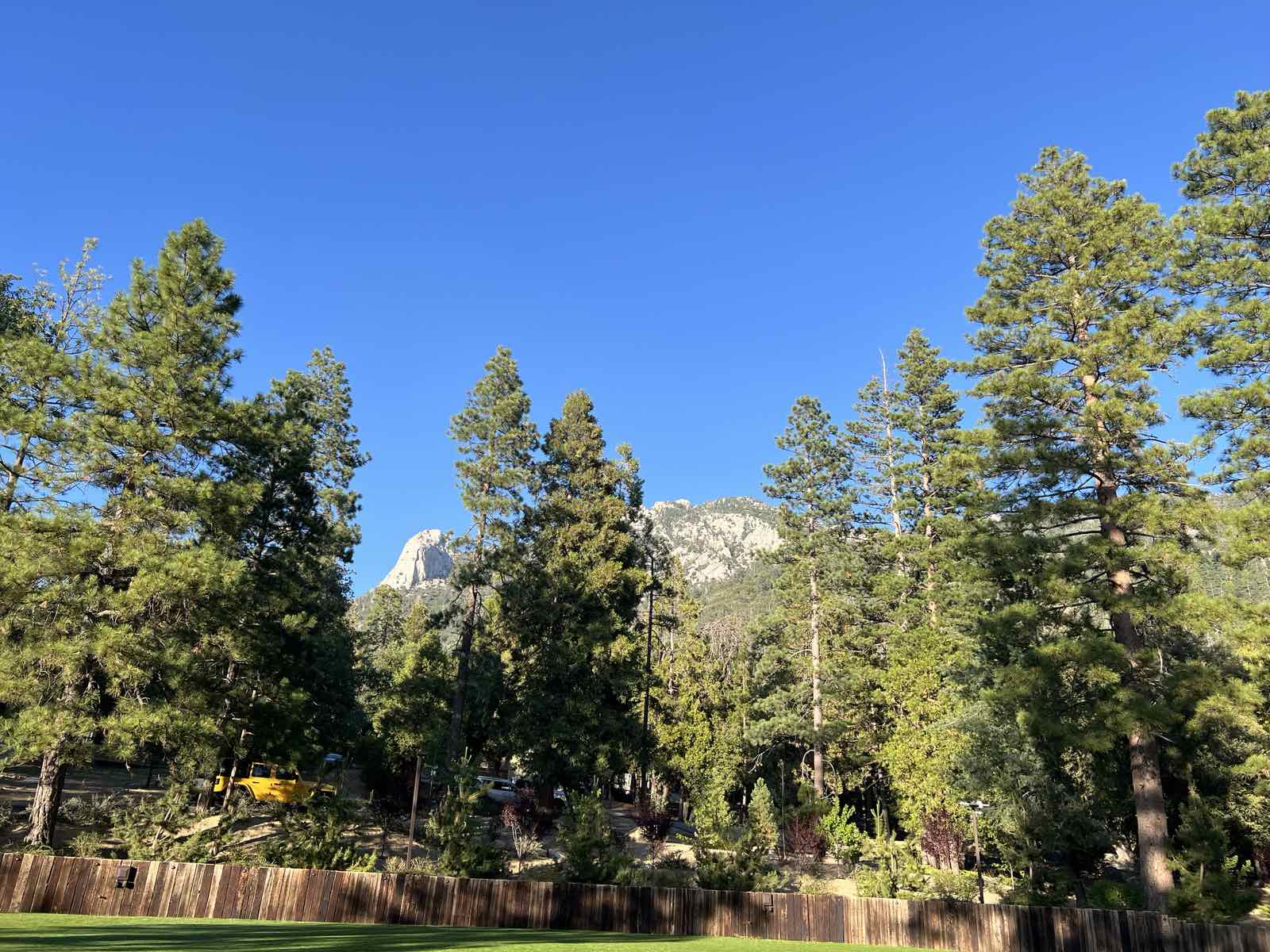
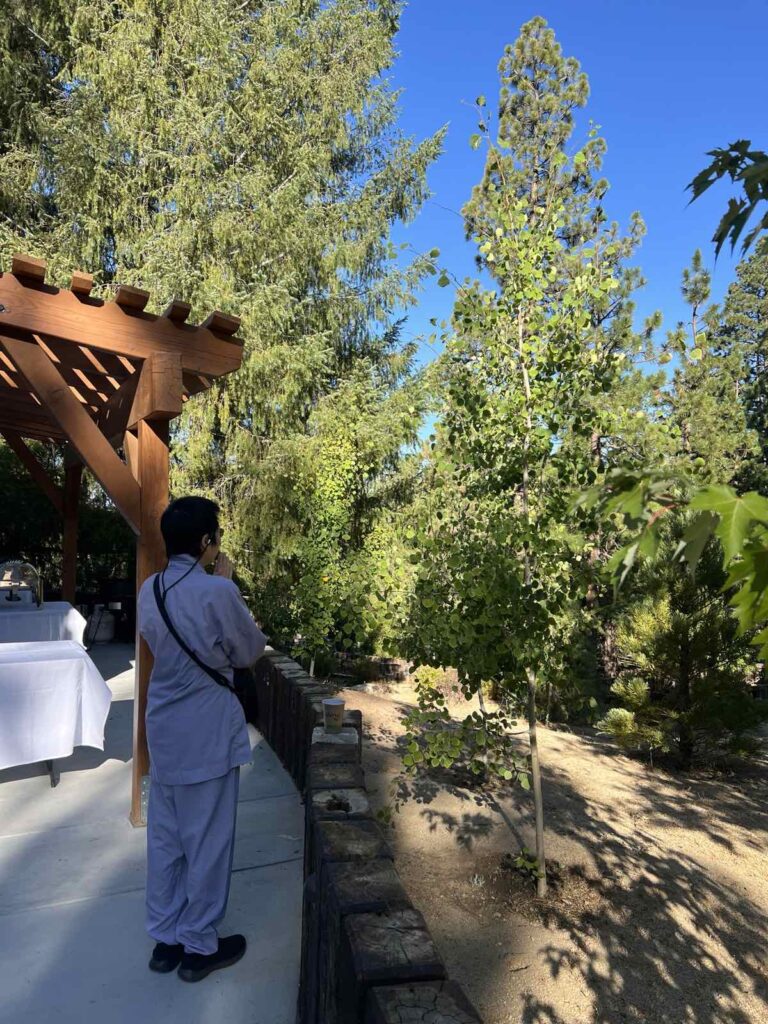
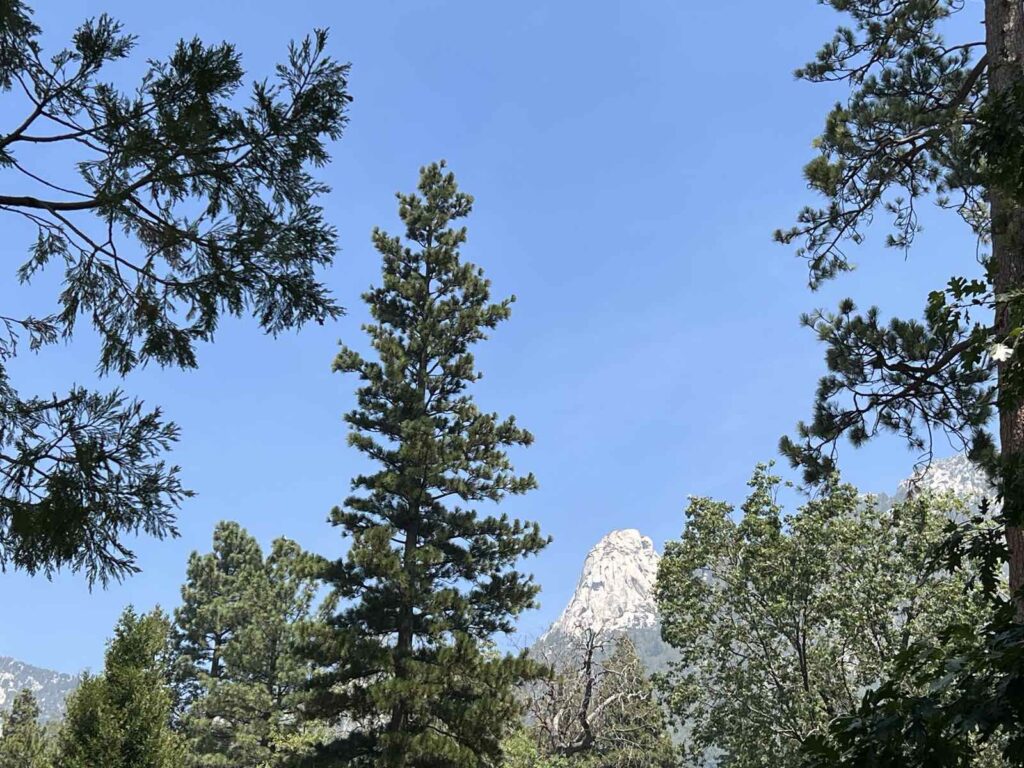
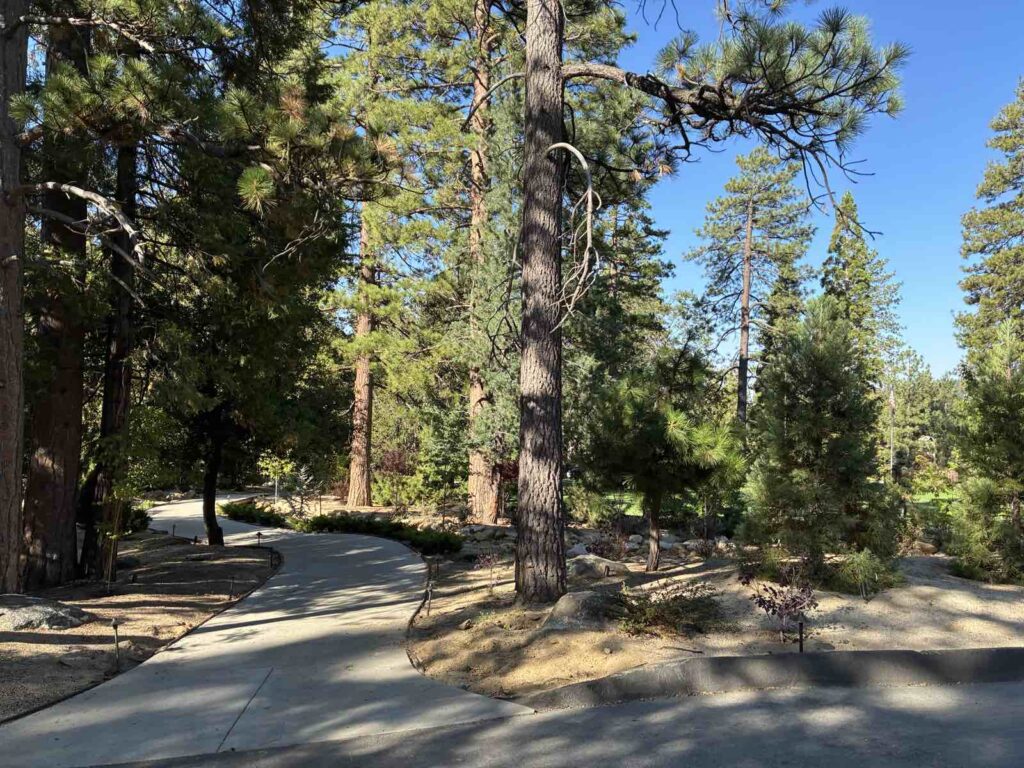
    Tahquitz in the early mornings of August is truly pristine. Dew still clings to the leaves, sunlight gently touches the distant mountain peaks, and a soft breeze flows through the pine forest and clusters of lavender, carrying a delicate fragrance. After our morning meditation, we practiced a gentle yet profound spiritual exercise—the first lesson Thầy offered in the seven-day retreat: offering compassionate water to the trees.

    In front of us were clear glasses of water, each holding a small sprig of evergreen. We dipped our index fingers lightly into the water and wrote the seed syllable SA—the 16th of the 42 Avatamsaka seed syllables, also known as the Great Rain Mantra. In stillness, we closed our eyes, placed our palms together, and chanted the mantra seven times:

    Su lu, Su lu, Om Su lu Su lu, Bo la Su lu, Bo la Su lu, Su lu Su lu ye, So po ho.

    We visualized each drop of water touching our fingers returning to the glass—becoming a stream of pure nectar, carrying healing energy that radiates in all directions.

    As we stepped into the forest, we gently sprinkled each drop of water onto the trunks and roots of trees along the path. Each drop fell like the nectar of Quan Si Yin Bodhisattva, carrying love, forgiveness, and equanimity. In our hearts, we offered a prayer: may all the trees and plants here joyfully receive this offering, continue to grow lush and green, and gift the world with shade, fresh air, and vibrant beauty—reflecting the unconditional generosity of the Bodhisattvas.

    Each day, we performed this ritual three times, either before or after each meal. It served as a quiet but profound reminder: when receiving a meal—nourishment from the earth and all living beings—we should also give back, offering something to the life around us. And here, that simple gift was a drop of water, infused with deep gratitude and loving-kindness.

    The Sacredness and Intelligence of the Forest

    One afternoon, Thầy led us on a walk through the forest to observe the trees. Along the way, he and our fellow practitioners shared stories about the sacredness, sensitivity, and wisdom of the trees they had encountered in places they had lived or visited.

    We learned that the forest is a vibrant and intelligent community. Through underground networks of roots and fungi, trees can connect, communicate, and nourish one another. Scientists call this network the “Wood Wide Web”—a hidden information system, like the internet of the forest. When a tree is in danger, signals are sent so the entire forest can respond and protect its species. Mother trees can even transfer nutrients to young saplings growing in the shade, offering silent protection.

    Thầy also reminded us of the fallen logs—trees that have collapsed or dried out, seemingly lifeless and useless, yet still quietly performing their sacred duty: returning nutrients to the soil, providing shelter for small creatures, and becoming an essential part of the cycle of life. Even in death, the tree continues to offer itself to life.

    He advised us: do your best not to cut down or destroy trees or forests. If it must be done, do so with sincerity—ask permission, offer prayers, and seek understanding from the tree, as well as from the spirits and deities that dwell within it. At the same time, sow new seeds elsewhere, plant more trees around your home or wherever possible, so that life may continue to flourish.

    That story helped us realize: trees are not silent wooden beings, but a community that knows how to connect, give, and love—like a great family of nature.

    The Virtue of Trees – The Virtue of Bodhisattvas

    Walking through the forest in the morning, the air was cool and fresh. But by noon, the sun grew harsh and dry, and we felt the intensity of nature’s extremes. In that moment, the shade of the trees became incredibly precious.

    Sitting beneath the towering pines or resting under the broad shade of an oak, we felt the protective embrace of nature. The oak tree may appear unruly, not as straight or majestic as the pine, but its shade spreads wide, cooling the space around it. The temperature dropped noticeably, and the heat eased. Thầy said: Bodhisattvas are like that too—simple and humble like the oak tree—not flashy, but offering vast protection. The virtue of the tree is the virtue of the Bodhisattva: silently giving, quietly sheltering all beings.

    Gazing at a Tree – Seeing the Stream of Life

    When offering water in devotion, we don’t distinguish between tall or short, big or small trees. But if we look deeply, ancient trees reveal profound lessons. A human life, at most, lasts a hundred years. Yet trees have stood for hundreds, even thousands of years—quietly witnessing countless changes, enduring storms, cold winds, sun, and rain.

    One breath out, without another drawn in, marks the end of a life. But the stream of life continues to flow. Majestic trees remind us that our presence today is just a fleeting slice—a single “slide” in the vast film of existence. What we see in this moment is not the whole, but merely a tiny fragment of a long unfolding process. If we pause for a moment and look deeply, we may glimpse the hidden journey behind it all.

    Life is much the same. When we see someone act unkindly or speak harshly in a moment of pain, let us not rush to judge. That moment is just a slice—we cannot know the countless causes and conditions that led to it. Sometimes, even a small trigger can awaken a tangled web of karmic ties from many lifetimes, igniting a fire of anger that burns down a forest of accumulated virtue.

    Human life is brief, and a narrow view—seeing only the surface—leaves us without the depth or wisdom to perceive the full arc of karma. But ancient trees, standing tall through generations, seem to have witnessed it all. In contemplating them, we learn to see the whole journey. And in seeing the journey, our gaze softens. We become more patient, more compassionate, more forgiving—lifting one another gently along the path of practice.

    Then, we no longer see only faults and flaws, but also the beauty and light within each person—shining like the radiance of the true self. That light, like the sun, has never ceased to shine. It’s only that, at times, clouds of selfishness, envy, and rivalry drift across, making us mistake the sky for darkness.

    A Prayer Before the Green Forest

    These stories and teachings made us cherish each drop of water we offered even more—especially in recent years, as wildfires have repeatedly ravaged forests, claiming the lives of animals and destroying homes and property—particularly in California, where losses occur almost every year.

    Therefore, as we sprinkled each drop of nectar under the blessing of Quan Si Yin Bodhisattva, we not only dedicated it to the forest of Tahquitz, but also prayed that these drops would multiply and spread across the San Bernardino Mountains, throughout all forests in California, and to every green forest around the world—so that all may be nourished by this pure water, overcome drought and fire, and continue to offer life.

    A week passed, and our footsteps marked the small trail through the forest. The rustling leaves in the wind felt like nature’s gentle response. We realized that we, too, had been refreshed. Each drop of water, each mantra, and each touch of leaf to breeze—had become a bridge connecting our hearts to the breath of the forest, making every moment a gesture of gratitude and a gift to life.

    And so, we told ourselves: when we leave Tahquitz, we will not only carry the memory of the forest, but also hold in our hearts the spirit of this practice. Wherever we are—a city park or a small garden in front of our home—we can still offer compassionate water. Because when we give a drop of water with a pure heart, we are planting a seed of love and gratitude into the world.

    We thank Thầy for giving us a lesson and a practice so simple, yet profoundly deep—nurturing compassion and gratitude for all. 

  • The Home of the Altruistic Sangha: Tạo Hiền Sơn Trang in Murrieta

    The Home of the Altruistic Sangha: Tạo Hiền Sơn Trang in Murrieta

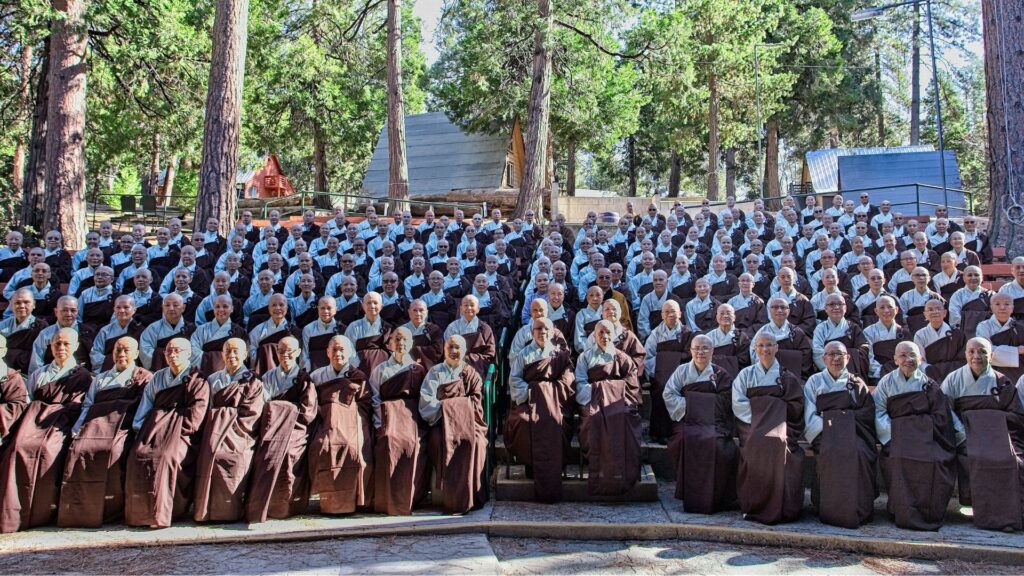
    Over the past two decades, the Xuất Gia Vị Tha Sangha has steadily grown on the path of cultivating compassion and wisdom. Each year, during our twelve-day retreat, we set aside worldly life, put on the robe and sash, uphold the ten novice precepts of Sa-Di/Sa-Di-Ni and vow to practice diligently – dedicating the merit to others.

    Rooted in the profound philosophy of the Avatamsaka Sutra and the wondrous practice of Quan-Yin Forty-Two Hands and Eyes, we have gathered in places such as Pine Summit, offering prayers for those who are gravely ill, in hardship, or who have passed away. This sacred spiritual journey always concludes with the Mandala and World Peace Gathering at the Anaheim Convention Center.

    A New Chapter in Our Journey

    Today, we joyfully welcome a meaningful milestone on the Sangha’s path of spiritual cultivation. Thanks to the generous heart of the Compassionate Service Society, the Compass Sangha now has an official home: Tạo Hiền Sơn Trang, nestled in Murrieta. This is a deeply moving moment and a significant step forward for our community.

    In past years, the Sangha relied on renting various locations to host our annual retreat. While that cherished tradition will continue, this new home offers a warm and intimate space for thirty to forty practitioners to gather, make deep vows of practice, and nourish their spiritual roots together.

    Cultivating Dharma in Every Cell

    While the annual XGVT retreat emphasizes altruistic practice and the dedication of merit, the new spiritual home at Tạo Hiền Sơn Trang will focus on the second pillar of the XGVT program: transforming the self and becoming a Dharma vessel. Through weekend retreats and monthly trainings, this sanctuary will serve as a steady refuge for the Sangha—a sacred space where we can step away from worldly entanglements, dwell in stillness and inner peace, and gently awaken the clarity of our true nature.

    This home is not a replacement for the annual XGVT retreat, but a meaningful complement: a quiet and nourishing haven for practice, offering a strong foundation for the Sangha’s deepening and enduring commitment to serving others.

    Join Us on This New Path

    The new home of XGVT at Tạo Hiền Sơn Trang marks a new chapter in the evolution of the Altruistic Home Leaving program, opening the door for monthly trainings—both online and in person. This is a precious opportunity for the sangha community to grow closer, support one another in practice, and cultivate the collective energy of the Sangha.

    The CompaSS Shangha Team warmly invites our Dharma brothers and sisters to walk together on this new path. Please stay tuned for the announcement of the first retreat at Tạo Hiền Sơn Trang.

    Together, we will continue to nurture and radiate the two luminous streams on the Bodhisattva path: the life of altruism and the realization of selflessness.

  • XGVT 2025 – An Ordination That Lifted My Soul

    XGVT 2025 – An Ordination That Lifted My Soul

    By Ralph Maamaatua  – Dharma name: Thân Khai Thuận Hí.

    From Tahiti to Los Angeles, there are no less than 6,000 kilometers. I covered that distance in 8 hours by plane, something my ancestors would have done in a month and a half by double canoe. Since my arrival at Tom Bradley International Airport, challenges had arisen—but I overcame them one by one. I only had one goal.

    Christian by Family Tradition.

    I retired from my role as a communications officer in 2018 and have four wonderful children—three daughters and one son. Like me, all are baptized Catholics.

    A Long-Ignored Spiritual Calling

    Buddhism has always held a certain fascination for me. Even as a young adult, I felt its subtle calling—but I ignored it for a long time.In Tahiti, where I live, Christian religions are predominant. Catholics, Protestants, Mormons, Adventists, Pentecostals, Evangelicals, Jehovah’s Witnesses, and other newer churches coexist without visible conflict.

    The Asian community—mainly Chinese—is a minority. Traditionally Taoist, the only Chinese temple in existence is the daily site for traditional offerings to the god Kanti and the oracles. Among the deities honored in this small temple, Kuan Yin holds a special place. Though placed to the side—near the entrance—her statue is the largest. The garden hosts the community’s annual cultural day and the celebration of the Chinese New Year.

    The island has only one Buddhist meditation center, which opened in 1993 and follows the Tibetan tradition with about forty practitioners.In 2018, shortly after beginning my Integral Tai Chi practice, I was introduced to meditation by Mr. Thanh, founder of CSS Moorea Tahiti. Step by step, I came to know the Buddhist culture of my mentor and the Avatamsaka Sutra school under the guidance of our teacher, Thầy Hằng Trường. Defined by compassion and love, Thầy’s teachings and his warm personality convinced me of the kindness of this tradition. Since then, I’ve continued deepening my knowledge and nurturing my Buddhist practice. That said, I have not abandoned my Catholic practice.

    In 2022, Polynesian friends invited me to explore their Tibetan Buddhist practice. When I was offered the opportunity to take the Three Refuges via Zoom with a Tibetan lama I didn’t know at all, I quickly declined.

    Cancer—The Shadow That Devours My Family

    For years, cancer has been gnawing away at my life, piece by piece. It took my father, who died of throat cancer. It claimed my mother, ravaged by breast cancer that spread to her lungs. My oldest sister is fighting the same disease. My younger sister battled thyroid cancer. And now, the eldest and youngest of my children are affected by a rare and incurable cancer. They are still young, but their future is so uncertain—perhaps even improbable—it breaks my heart.

    Each diagnosis is an electric shock, a crushing blow. Each treatment, a trial. Every day is a battle against the fear of losing another loved one.

    I live with the constant pain of seeing those I love suffer, both physically and emotionally. Fear never leaves me. Powerlessness consumes me. It’s not just a challenge—it’s a recurring tragedy, an endless fight.

    And yet, I must stand strong—for them—so as not to fall apart. But I must say it: I’m hurting, deeply. Still, I must go on being strong—out of love, duty, and hope, however fragile—and I try to persevere in the shadows.

    A Fervent Desire for Compassion

    A year and a half ago, a genetic test in Paris revealed the origin of my eldest daughter’s paraganglioma. Following that, my three other children, my two sisters, and I were all tested. The analyses were sent to France and took a long time to process, with results arriving very slowly.

    After my son’s positive genetic test last August, further tests and analyses followed. By the end of September, a final diagnosis was made, and his medical evacuation to Paris was scheduled for the end of the year. From that moment, an indescribable anguish gripped my throat—like a scream choked by pain, guilt, and confusion. My Buddhist practice intensified, and I prayed every morning for Kuan Yin’s help.

    On the internet and social media, I came across announcements from the Compassionate Service Society (CSS) for the Mandala 2025 and the Altruistic Leave Home program. I decided to participate in the retreat and the Mandala to pray for my two children.

    No Matter What Happens

    Six months before leaving for the U.S., I had adopted a vegetarian diet to manage stage 3 kidney failure. As a result, I lost 10 kilograms, which led to low blood sugar, faintness, and blackouts. Several consultations with my cardiologist, nephrologist, and vascular specialist were needed to stabilize my medical condition. Yet my determination remained unwavering.

    Taking Refuge in the Three Jewels

    Taking refuge marked a key milestone on my spiritual path.Before receiving the precepts, the shaving of our heads as temporary monks and nuns was our first step toward renouncing worldly life. It was a very powerful moment—perhaps even more so for novices like me. I couldn’t hold back my tears when I spoke of my two sick children, to whom I dedicated the merit of my cultivation.

    Receiving the precepts to become a temporary monk or nun, vowing renunciation, is a truly deep commitment to sincerely cultivate the qualities of the historical Buddha—the Awakened One. That is our first refuge.

    Understanding the essence of the Dharma and applying it in daily life is essential. It’s the foundation of our spiritual development, the bedrock of our Buddhist faith. Joining the Sangha is vital for drawing inspiration from others who strive to cultivate the same qualities of kindness and compassion.

    Taking refuge in the Three Jewels gave my spiritual practice an entirely new dimension. The commitments we made must be renewed every day—even after we return our precepts. My Dharma name within the Sangha is Thân Khai Thuận Hí.

    A Form of Priesthood for the Healing of My Two Children

    I understood clearly that during this retreat, I wasn’t meant to become a monk for life. Taking the Three Refuges, living the precepts of a novice for two weeks, immersing myself fully, and offering the merit of my sacrifices to my two children—this was a true spiritual endeavor.

    At Pine Summit Camp, I discovered a different way of life, a different climate, a different culture, a different language. But we are all human beings, alike in our virtues and imperfections.

    It was my first retreat with CSS. I joined the Sangha I had been following on Zoom. Some familiar faces welcomed me warmly and made me feel at ease.

    I made many new friends—Dharma friends, Dharma brothers and sisters. I integrated easily; the connection felt natural. I was filled with joy.

    Underestimating Big Bear’s climate, I wasn’t prepared for the cold nights. Unused to the cold and not dressed warmly enough, I caught a chill on the very first night. It weakened my body, but I had to endure it at all costs—for my children.

    In Total Seclusion

    Pine Summit Camp is a new environment for me—the nature, the forest, and the snowy peaks are extraordinary. The place is beautiful, the members of the Sangha are kind, and I felt at peace.

    On the first day, I settled into dormitory 6A with the young “pro students,” as Thầy calls them. It was my first time meeting them, but I had the strange feeling that I had already known them—a kind of déjà vu that was a bit unsettling, though not unpleasant.

    This silent retreat brought me deep inner peace, favorable for reflection on my life’s mission, and conducive to prayer. It was an exceptional experience—one of complete seclusion. Days and nights where mindfulness was continuously activated, 24/7, in everything I did—from sunrise to sunset, and perhaps even during sleep.

    So Many “Wows”

    Meditation sessions, teachings, and physical exercises followed one after another. The schedule was packed, the days were long—but built-in rest periods gave us time to recover.

    Receiving Thầy’s teachings in person, in the midst of the Sangha—meditating, chanting mantras, and praying together—had a whole different power. A synergy so strong that it easily carried us beyond the borders of consciousness. It was a true “Wow,” as Thầy would say.

    I lost track of time. I never tired of practicing and listening to Thầy’s new teachings.The new meditation where we activate the column of light was extraordinary. Like the “six hands and eyes” meditation—my favorite—it transported me.

    During the retreat, the story Thầy told us about the sacred lands of Hawai’i deeply touched me. Of course, it spoke to my heart—those distant cousins who populated the Hawaiian Islands in ancient times traveled in double canoes from my homeland. Hawaiians call Thầy “Kahuna”; in my land, we’d call him “Tahu’a.” A spiritual master who uses no earthly remedy, but who connects with the spirits of the dead and resonates with the divine. Being a “Tahu’a” isn’t a choice—it’s a destiny.

    Naturally, the story of Thầy’s encounter with an Arhat at the summit of Mount Otemanu on Bora Bora was astounding and full of mystery.

    When Thầy asked me if we used mantras in Tahiti and on our islands, I replied yes without thinking. Thinking back, I should have reflected my answer. There are indeed similarities between Polynesian and Asian, even Buddhist cultures—like all traditions tied to nature. The five elements, the duality of visible and invisible worlds, etc. My ancestors were polytheists, and spirits inhabited every part of nature, every object made by human hands. Our legends overflow with fantastic tales. There’s no doubt that in pre-European Polynesian culture, a divine language existed, known only to the priests—the “Tahu’a.” But our oral tradition left no written trace of this ancient knowledge. Only a few rare “Tahu’a” still communicate with the gods of our ancestors—during fire-walking ceremonies, for example, or before a traditional sailing canoe voyage between the islands of the Polynesian triangle: Hawai’i, Aotearoa (New Zealand), and Rapa Nui (Easter Island). Tahiti and her islands are the epicenter—the launching point—of my ancestors, my tupuna, who set out to colonize these new lands, likely revealed in the dreams of visionary priests.

    Master Hằng Trường and my vow

    Master Hằng Trường has many gifts. He’s a brilliant speaker, an eloquent ceremony master, a man full of human qualities, a humble and generous spiritual guide, and an undisputed Dharma master. One cannot help but love him and feel deep gratitude.

    The teachings received during the retreat brought tremendous depth to my spiritual practice. I now cultivate the Path differently—perhaps with more conviction. I’m only at the beginning of my journey. I feel good where I am—this is the Path I want to continue following.

    This retreat confirmed my choices as a Buddhist practitioner and truly inspired me to continue my initiation within the Hoa Nghiêm school.

    I vow to return next year.

  • My Master

    My Master

    MY TEACHER (IN THE DHARMA PATH)

    “The young man, born of noble lineage,

    Set aside brush and ink, took up sword and bow…”

    (From “Lament of the Soldier’s wife” – Đoàn thị Điểm, Nôm script version)

    That is my master, but he did not “take up sword and bow.” Instead, he “folled the path of Huayan school.”

    Thu Tân Khang Tại

    (Penned in a moment of inspiration, July 2025)

    The light gray section above was the opening of a six-page essay written on March 15, 2014. In a blink, eleven years have passed. Seven times I have ordained, countless times I have changed “roommates.” But one thing remains absolutely unchanged: one Master, a noble being, a true Spiritual Friend (善知識 – Thiện Tri Thức). Venerable Master Hằng Trường still holds the central seat in the Dharma hall, still wears the same black inner outfit; when needed, he dons the golden outer robe—vibrant like fresh turmeric—and the solemn brown sash. That is my Master! Truly a “noble being,” both literally and figuratively.

    Literally, “noble being” refers to his physical stature—he stands as tall as a Westerner; when I stand beside him, my head barely reaches his shoulder. I remember in April 2025, after the “Altruistic Leaving Home Retreat” (XGVT), the CSS family (from all locations) gathered at headquarters. As disciples lined up to bid farewell to the Master, I had to quickly walk up two steps in the receiving-guest room so that he would not have to bend his knees to embrace me. Writing this reminds me of a quirky comparison: According to the legend of the Dragon and Fairy, after giving birth to a sac of 100 eggs, which hatched into 100 children, Lạc Long Quân and Âu Cơ parted ways—50 children followed their father to the sea, and 50 followed their mother to the mountains. Today, our Master has even more than 50 “children” (disciples); and they do not just dwell in the mountains—they reside peacefully everywhere.

    Rather than leading us up the mountains, our Master guides his “flock” along the Bodhisattva path, as taught in the Avataṃsaka (Huayan) Sutra. So, when the retreat ends and it is time to part, Master Hằng Trường’s “children” line up—filling the guest room—to embrace their “young father” (for “Master” also means “Father”) in farewell. Then, the disciples turn to embrace one another before returning to their respective homes. From all corners of the world, whenever there is an XGVT retreat, the “children” return as if to their loving home. First, to revisit a place of peace, love, and warmth; second, to see their “young father” and receive training in body and mind, to listen to the Dharma—which grows more wondrous each year. The more disciples, the greater the joy; the more open the arms and hearts become.

    And during group photos, I’ve sometimes hidden behind the towering figure of this “Noble Being”—partly to practice the principle of “formless and invisible” that I’ve long studied (for what’s learned must be practiced), and partly to enjoy the comfort of “sheltering in Compassion.” In the past, when I heard the phrase “sheltering in Compassion,” I vaguely imagined Buddhas and Bodhisattvas (embodiments of Compassion), and wondered: how can I take refuge in their shadow when I have never met them in person? But now, I understand—Bodhisattvas are not far away. Many “little Bodhisattvas” live quietly among us. And my Master has given me a spiritual shade to rest under, to rely on as I cultivate my mind and transform my character. Not just for me, he offers this to many beings—seen and unseen, sentient and insentient—and continues to give, tirelessly and selflessly.

    Figuratively, “noble being” refers to a true Spiritual Wiseman—one of vast wisdom and eloquence, as countless as grains of sand casually scooped up in a hand. My Master’s knowledge is immense, both innate and cultivated—nurtured by his own Master, the Great Venerable Hsuan Hua, and deepened through tireless study of scriptures and dedicated daily practice, leading to profound realization. He faithfully follows the teachings of Master Hsuan Hua, developing a path of cultivation based on the Avataṃsaka Sutra and the Great Compassion Mantra, structured as follows: (a) One Huayan Bodhi Mind, (b) Two Dimensions of Cultivation and Practice, (c) Three Directions of Development, (d) Four Methods of Burden Resolution, (e) Five Ways of Simple Living, (f) Six Hands of Avalokiteśvara.

    Like the Monkey King—undaunted by mountains or oceans, soaring through clouds and storms, unafraid of dragons or gods—who ultimately could not leap beyond the Buddha’s palm (those five towering fingers like the Five Elements Mountain). I too, despite my restless monkey mind, remain under my Master’s guidance. He knows my karmic roots, my spiritual capacity, and my cultivation as clearly as the lines on his palm. He simply does not say it aloud—but he knows it all (thoroughly/completely).

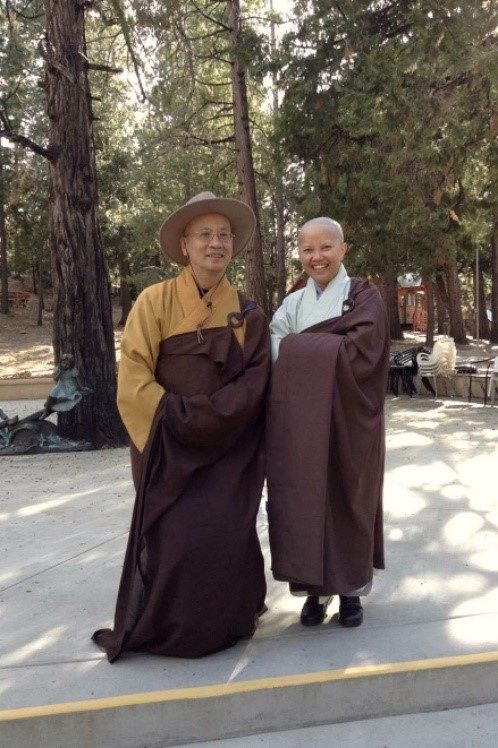
    During my first ordination in 2017, I learned humility from my Master. According to the 1960 Sino-Vietnamese Dictionary by Nguyễn Văn Khôn, khiêm cung means “modest and respectful.” But here, I wish to express a deeper meaning: khiêm cung as a way of being—humble and unassuming. There is an American song titled “If” with the line: “If a picture paints a thousand words, then why can’t I paint you?” I want to share a photo taken with my Master during that first ordination-head newly shaved, wearing a robe and kashaya. To me, this image portrays the humbleness and unassuming traits (as I define it) of a wise Master toward an inchoate, undersized disciple. The photo speaks volumes—through posture, smile, expression, background, and lighting—but I will leave that reflection to each viewer. As for me, I will carry this image for the rest of my life, as a reminder of the “noble being” who, with both virtue and wisdom, accepted a humble student like me.

    And finally, I have come to realize a timeless truth passed down through the ages: A great Master produces great disciples. That great disciple is my Dharma brother!

    My Dharma Brother

    His Dharma name is Khai Nghiêm who carries within him a rich heritage—Vietnamese and Chinese by blood, raised in France. In his early twenties, after achieving academic and professional success, he let go of his worldly career and ordinary life to walk the spiritual path. He committed himself to the Huayan tradition, dedicating his life to service and the practice of the Bodhisattva ideal.

    He is a “distinguished disciple,” not only in stature—standing nearly as tall as our Master—but also in spirit. He ordained under our Master at a very young age, during his teenage years. In some ways, he even surpasses our Master: he is younger, fluent in more languages (French, English, Vietnamese, and Chinese), and has endured a more painful family history (as I learned this during his visit to Houston in March 2025, when he came to promote the XGVT program. Though I was busy with errands and only caught fragments of his sharing, his gentle and composed words still conveyed the deep sorrow of his family’s past.) He also has the rare privilege of being an older brother—at least to one person. He has a younger sister, who appeared at the recent XGVT retreat in April 2025, accompanied by their elder sister from France. Our Master, on the other hand, being the youngest son in his family, never had the chance to be an “older brother” in the biological sense.

    Despite his youth, Khai Nghiêm always responds with thoughtfulness and care. During the XGVT retreats, his robes are always immaculate and dignified, radiating the noble presence of a model novice monk. In the past, I found him to be rather serious and reserved. But that changed after I sent him a brief email with just two words: “Mô Phật”, expressing my gratitude for being one of the last to be accepted into a time-sensitive program. Since then, whenever we meet, he greets me with a warm smile and the same phrase: “Mô Phật”.  I return the greeting in kind.

    In earlier years, he oversaw the entire XGVT program. Later, following our Master’s guidance, he passed some responsibilities for the U.S.-Europe branch to Dharma brother Vũ Thượng Quân. Khai Nghiêm now resides in Taiwan, where he focuses on developing and training the monastic community in Asia. He successfully led the first XGVT retreat there in 2024, with 50 novice monks and nuns, under the formal recognition of our Master.

    As time passed and opportunities to work together increased, I gradually grew closer to him. Our connection deepened through shared tasks and small acts of service I was able to offer. It was not until the 2022 XGVT retreat that I finally felt comfortable enough to ask for a photo with him—taken just after our Master conferred the full returning precepts upon the sangha.

    Khai Nghiêm is clearly a true disciple of our Master. He embodies the same gentle humility that our Master once did. His eyes, posture, and smile all reflect youthful kindness and compassion which, in turn, stirred and left a warm impression in me, someone who just begins her journey on the Bodhisattva path.

    I am grateful that Khai Nghiêm is part of this intricate web of karmic connections woven into the tapestry of this humble seeker’s life.

  • My BTHP Reflection: When Serving Becomes Spiritual Practice.

    My BTHP Reflection: When Serving Becomes Spiritual Practice.

    By Lan Choi

    Q: Can you tell us what is the reason(s) you joined the BTHP program?
    A: I’ve always loved volunteering—it feels like a blessing to be able to give. There’s something deeply humbling and joyful about being in a position to offer support, rather than needing to rely on others. To give is to be entrusted with the opportunity to serve, and that in itself is a gift.
    I was also genuinely curious about what the Sangha was learning and cultivating. Becoming a BTHP felt like the perfect doorway—not only to support the retreat, but to witness and participate in the Dharma being lived. It allowed me to observe the Sangha’s practice up close and to reflect on my own path with greater clarity. In many ways, it was both an offering and an invitation to grow.

    Q: Did the essence of being a BTHP shift your core values?
    A: It was a truly meaningful experience—one that reminded me of the importance of humility and the joy of serving. I’ve always loved volunteering, so being able to do that with CSS felt like a blessing. There’s something deeply fulfilling about working alongside others toward a shared goal, especially when that goal is rooted in helping and uplifting others.
    Being a BTHP was rewarding in every sense. I felt a sense of joy and purpose in the collaboration, in the quiet moments of service, and in the collective spirit of care. That kind of community energy—where everyone is contributing with open hearts—is something I deeply cherish. It’s the kind of spirit that nourishes both the giver and the receiver.

    Q: What do you think about the Sangha?
    A: When I saw that the Sangha included people of all ages and at various stages of their spiritual cultivation, something shifted in me—I thought, I could do this. Then, during one of the sessions, Thầy spoke about one of the most selfless acts: the Sangha’s willingness to set aside self and ego in order to dedicate the merits of their practice to others. That moment struck me deeply.
    I realized I didn’t need to wait until I felt “ready” or spiritually advanced enough to understand the Dharma more fully. It wasn’t about reaching some ideal level of cultivation—it was about the act of giving, of being selfless. It was about putting aside vanity and ego to offer the fruits of one’s practice for the benefit of others. Now, it’s simply a matter of continued reflection and cultivation—gathering the courage and humility to take that step and join the Sangha when the time feels right.

    Q: Did you feel your task or role helped you to unfold and nurture the Bodhisattva path?
    A: Absolutely. Being able to learn the Dharma directly from Thầy while simultaneously serving others felt like a true embodiment of Transcending Worldliness and Engaging with the World—stepping out of the world to cultivate, and stepping back in to serve. Working closely with others for many consecutive days, often with little sleep, offered countless opportunities to practice mindfulness and compassion in real time.
    I found myself needing to anticipate potential tensions and consciously prepare to respond with equanimity. It wasn’t just about avoiding conflict—it was about not even allowing negative thoughts to arise when I felt tired or frustrated. That kind of mental preparation and inner discipline felt deeply aligned with the Bodhisattva path. If I can carry that same intentionality into my daily life, it would be a gift—not only for myself but for those around me.

    Q: What was your most uplifting moment during the retreat?
    A: One of the most uplifting moments for me was during our group mantra recitations, when Thầy began to sing the Thousand-Petal Lotus song for YSA. As more voices joined in, a wave of peace and joy washed over me—a feeling of deep connection, not just to the music, but to its meaning and the collective energy of the Sangha.
    I remember vividly the joy of simply being there—fully present, learning from Thầy, and cultivating alongside others. It felt like such a blessing, a moment suspended in grace. That song in particular has stayed with me. I’ve been singing it at home almost every day so I don’t forget. And each time I reach the high note, I feel something stir in me—something tender and true. It’s as if the song itself is a gentle reminder of the beauty of the path and the gift of being part of it.

    Q: What was your most memorable moment?
    A: It was when the BTHP team gathered after our serving shift to sing and celebrate the birthday of one of the dining hall workers—Christy, I believe. Though most of us had only met her a few days earlier, the warmth and sincerity of the gesture deeply moved her. The outpouring of love from near-strangers was palpable, and her co-workers, too, seemed touched by the spontaneous act of kindness.
    It was beautiful to witness people from different backgrounds—many of whom barely knew each other—come together in such a genuine spirit of care. I remember feeling inspired by our Dharma sister Antee’s open-heartedness, her ability to embrace someone she had just met with such ease and joy. In that moment, I thought: This is what Thầy has been teaching us.

    Q: Did the spirit of BTHP help you become more compassionate and supportive of others in daily life after the retreat?
    A: When I read Diana Ta’s text about being gentle in the way we serve and carry ourselves, it made me realize that how we serve is just as important as the act of serving itself. The quality of our presence—the softness, the mindfulness, the intention—speaks volumes about our inner state.
    Service isn’t just about completing tasks; it’s a mirror of our mindset and heart. When we move with gentleness, we embody compassion. When we serve with humility, we cultivate selflessness. That awareness has helped me see service not just as an offering to others, but as a practice of inner refinement.

    Q: Thank you for the conversation, Chị Lan Choi. Is there anything else you’d like to share before we end?
    A: Thank you for the opportunity to become a BTHP. It’s an experience I’ll carry with me always—filled with meaningful moments, deep reflections, and friendships that I’ll never forget. I’m truly grateful for the chance to serve, to learn, and to grow alongside such a beautiful community.

  • Letting Go Through a Strand of Hair

    Letting Go Through a Strand of Hair

    Thúy Võ / Thân Khai Thí Nhậm

    When I first heard the dharma friends from CSS SJ introduced the Altruistic Home Leaving Program (XGVT), I let them know right  away that I wanted to join, because the thought of getting ordained had planted a seed in me for many years. Even when they emphasized that participating in XGVT, I will have my head shaved. 

    That was back in July 2024. In October 2024, the organizing team sent out the official registration announcement. And within a week or two, I completed the registration, paid the fee, started requesting time off from work, finding childcare, ordering the ceremonial robes for the XGVT retreat which began in April 2025.  From registration to the moment I donned the robes of an aspirant, it was about six months. During that time, my heart was full of excitement. I studied mantras, listened to Dharma talks, explored the meaning of XGVT, connected with fellow participants, and prepared myself so that the practice would come more easily once the program began. 

    Was I worried? Yes. I was worried, first of all, whether I was “qualified” for the ordination when I knew very little of Buddhism or the Avataṃsaka teachings of the Venerable Master. I was also worried that what would my daily normal life look like without hair? Would I need to wear a hat or a wig? The question had lingered in my mind for months.

    Just like other women, I loved my hair so much. I always made sure to use the best haircare products, and limited blow-drying to avoid damage. I liked watching hair styling short videos and playing around with my hair. But after deciding to shave my head, I wasn’t afraid of “losing” it because I knew it would always grow back eventually. In that 6 months, I looked in the mirror almost everyday and imagined how I’d look like – being bald.

    Yet when the Master shaved my head and I entered the retreat, living among a Sangha of others who had no hair just like me; and even everyone said I looked “bright” and “beautiful”, I couldn’t bring myself to look in the mirror for days. Even when I needed to shave to keep my head smooth and shine, I avoided the mirror. It wasn’t until the fifth day. I saw myself as if I was a “man”, or “gangster”. My emotions were mixed, but I never regretted ordaining, not a day after returning to normal life. I didn’t bother wearing a wig in public or at work. I smiled when I saw children or strangers looking at me with curiosity in their eyes. The anxiety I once had about my bald head seemed to fall away like the strands of hair the Master cut off before I entered the retreat.

    What I felt after shaving my head was: Lightness. And a lesson of “Letting Go.” 

    When I decided to ordain and to shave my head, I began learning to let go, for six months. Yet on the day I shaved my head, I was in shock. A real shock. Though that feeling has passed, I’ll never forget that feeling. I learned a priceless lesson: letting go is not easy. Even with something as simple as hair—something I knew would grow back—I still felt shaken. So what will it be like on the day I leave this life? How much more intense will that shock be?

    For that, I discipline myself to practice dharmas—to truly let go with ease.
    How long will I need to learn? I don’t know.
    Will I succeed? I don’t know.
    But I will keep learning.

    Moreover:

    Whether I ordain or not.
    Whether I practice a lot or a little.
    Whether I have hair or not.
    Whether my hair is long or short.
    All of it is sacred.

    Becoming a novice nun for ten days was deeply sacred to me. My hair was sacred to me. Losing it was sacred to me as well. The life and dharma lessons I received after ordaining were sacred to me. Many people ask if I’ll do XGVT again. I honestly answered, I don’t know. Deep down, I know I will—but not sure when. Perhaps, whenever I’m ready.

    I’ll be deeply grateful if people would help me preserve those sacred things.
    Everything that comes into my life is a karmic connection.
    I hope to keep and nurture those connections as wholesome ones.

  • Meanings of the Conch Shell: Symbol of Ego, Journey of Transformation

    Meanings of the Conch Shell: Symbol of Ego, Journey of Transformation

    Thân Hỷ Trường

    The conch shell is a small creature, yet it carries a large and heavy shell. That weight causes it to sink and lie silently at the bottom of the deep ocean. Spiritually, we humans are like that conch shell. We carry an invisible but immensely heavy and vast “shell”: the ego. Our attachment to the ego weighs down our consciousness, dragging us into the depths of ignorance, causing us to suffer in the endless cycle of samsara.

    The shell envelops the entire body of the conch shell, keeping it still and silent, unable to move freely through the vast ocean. Similarly, the ego – with its thick layers of habitual tendencies and defilements—envelops and binds our consciousness. It keeps us stagnant in delusion, unable to take steps on the path of spiritual awakening. The shell is hard and difficult to penetrate; its toughness becomes a barrier that prevents the conch shell from interacting with the dynamic environment of the sea. Likewise, the human ego is deeply entrenched, formed from countless prejudices, opinions, and dualistic views. It blocks us from hearing the teachings of masters and sages, obstructs the reception of wisdom’s light, and closes our hearts to the truth that permeates the universe.

    The conch shell is a vivid symbol of the ego—formless, yet it makes us believe we are “somebody,” the center of the universe. Though its body is small, its large shell makes it think it is grand and extraordinary. The ego is the same: though empty, it constantly creates the illusion of its own monumental importance. Conch shell often live isolated and solitary at the ocean floor, avoiding mingling with others to form a group. Likewise, when humans are clouded by ego, they easily fall into loneliness and separation, living in a world of their own making. This stands in stark contrast to the Bodhisattva’s vow—to transcend the small self and merge with the truth of altruism, constantly expanding the web of interconnection.

    To use a conch shell as a horn, the body must no longer reside within it. When the shell is empty, it can be transformed into a conch. Its spiral interior amplifies sound, and a small hole is often cut at the pointed end to create a blowing tube. The flared mouth of the shell helps direct and project sound far and wide, making the emitted sound loud and resonant. Symbolically, if we wish to “call out”—to connect, inspire, or summon others effectively—our attachment to ego must be transformed. Only when consciousness is freed from the grip of the self can we become a conduit for transmitting truth.

    In the dharma practice of “Bảo Loa Thủ Nhãn” (Jewel Conch Hand and Eye), the shell is not merely a lifeless object but a sacred dharma object capable of transforming darkness into light, turning afflictions into clarity. It embodies the profound philosophy that “afflictions are none other than enlightenment.” The shell used in this practice is a true symbol of transformation. Darkness—representing afflictions, ignorance, and obstacles—enters the belly of the shell not to be rejected or destroyed, but to be gradually transformed into light through the sacred power of the ŚCA seed of luminosity. When this light passes through the exit hole at the tip of the shell, it becomes a laser beam shooting upward.

    When a conch shell dies, its flesh decays and is consumed by sea creatures. Its empty shell begins a long journey toward the shore. Lying at the ocean’s depths among mud and sand, it is gradually pushed by currents, tides, and waves toward land. This journey is not easy—the shell collides with sand and rocks, gets caught in seaweed, and may be pulled back by waves. Shells from the deep sea may take hundreds of years to reach the shore. In coral-rich or island areas with strong currents, the journey may be shorter, but most shells endure a long passage from the ocean’s heart to the beach.

    When we hold a conch shell and feel its smooth, polished surface, we’re touching the result of countless collisions with sand and coral, worn down over time. In contrast, shells still at the ocean floor are rough and coarse, having never undergone such abrasion. This is the image of the spiritual path. The road to enlightenment cannot be measured in months or years—it is a lifelong, even multi-lifetime accumulation.

    We are adrift in the ocean of suffering, swept by karmic currents and conditions, yet we also encounter invisible streams of dharma that gradually guide us to the shore of awakening. On this path, every stumble, every adverse condition or disappointment, is a moment of refinement. Only when our hearts are sufficiently polished and trained through hardship and challenge can our spirit evolve, leading to a consciousness that transcends the ego’s grip—liberated from delusion and irrationality.

    The message of the conch shell teaches us a profound philosophy. From being enclosed, fixed, and silent in the deep ocean, the shell begins to drift, surrender, undergo change, and finally reaches the shore. The once useless shell now becomes a conch that emits powerful sound—gathering, informing, and signaling others. Likewise, each of us lives within our own “shell”—the shell of ego, of the hardened and clinging self. But if we can let go of the mistaken notion of “I,” and transform our self-centered consciousness into selfless awareness, then like the ancient shell, we begin a new life—not rigid and meaningless, but full, purposeful, and beneficial to others.

    This journey of transformation is not short. From lying silently at the ocean’s bottom to being picked up, cleaned, and used, it is a long, quiet process requiring much time. Similarly, on the path of practice, we cannot expect quick results. We need patience, perseverance, and deep faith in the Dharma. Never think of yourself as “somebody”—someone important or special. Instead, always remind yourself that you are just a small conch shell, lying quietly at the bottom of the ocean of afflictions and ignorance. But if you maintain humility, steadfastness, and diligent practice, then one day, that small conch shell will be transformed and ultimately become a sacred dharma object in the practice of “Bảo Loa Thủ Nhãn,” bringing forth miraculous and inconceivable effects.

  • Letter from a first timer Altruistic Home Leaving in Taiwan

    Letter from a first timer Altruistic Home Leaving in Taiwan

    蔡惠玲 – Thái Huệ Linh / Dharma Name: 親怡慈厚 – Thân Di Từ Hậu

    When I was young, I held a quiet dream in my heart: to enter monastic life. But my mother needed me by her side in her old age, and out of deep filial love, I set that aspiration aside. I told myself gently, “It’s alright. If not in this life, perhaps in the next, I will become a Buddhist nun.”

    Years passed, and now my parents are old and frail. In March 2024, I was blessed with the opportunity to visit the mountain sanctuary of the Compassionate Service Society. There, I heard Venerable Hang Truong speak about the Altruistic Monastic Program (Xuất Gia Vị Tha – XGVT)—a beautiful practice of ordaining not only for one’s own liberation, but as a sacred offering for loved ones, dedicating all merit to them. His words touched something deep within me. The calling to walk the spiritual path for the benefit of others awakened a powerful compassion, and I knew I had to be part of it.

    With sincerity and joy, I vowed to dedicate every drop of merit from this brief but profound journey to my parents—and especially to my sister and brother, who have not yet learned about the Dharma. As children, they often brought sorrow to my parents, and that pain settled quietly in my heart over the years. Through this program, I offered my prayers with hope: that the energy of my practice might help them awaken a deeper love for our parents and a life rooted in compassion.

    Some may wonder why anyone would renounce everything for the spiritual life. To them, it may seem an extraordinary, almost impossible choice. But for me, ordaining—even temporarily—is the awakening of Bodhicitta: the altruistic heart that transcends self-centeredness and moves toward boundless care. Though I didn’t fully ordain in this lifetime, joining XGVT was the planting of a wholesome seed—a first step on the path of liberation. I trust that with this karmic momentum, full ordination will unfold swiftly in a future life.

    When I returned home from the program, I saw something quietly miraculous. My parents had softened—their spirits calmer, their words gentler—and our home was filled with warmth. I truly believe it was the compassionate energy of the practice and the depth of the altruistic aspiration that brought about this transformation. The XGVT program is not only profound, but also deeply practical and sacred. It bridges the heart of the monastic ideal with the realities of everyday life, allowing me to live the Bodhisattva path in the here and now.

English