Category: Blogging

  • My Master

    My Master

    MY TEACHER (IN THE DHARMA PATH)

    “The young man, born of noble lineage,

    Set aside brush and ink, took up sword and bow…”

    (From “Lament of the Soldier’s wife” – Đoàn thị Điểm, Nôm script version)

    That is my master, but he did not “take up sword and bow.” Instead, he “folled the path of Huayan school.”

    Thu Tân Khang Tại

    (Penned in a moment of inspiration, July 2025)

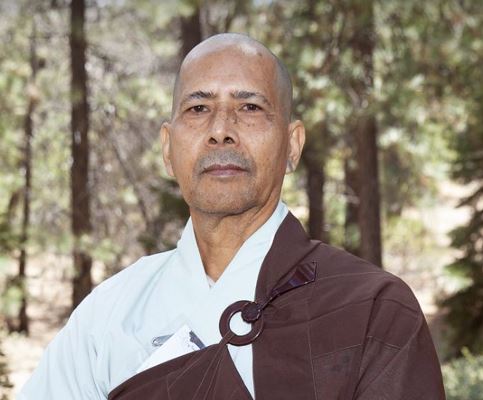
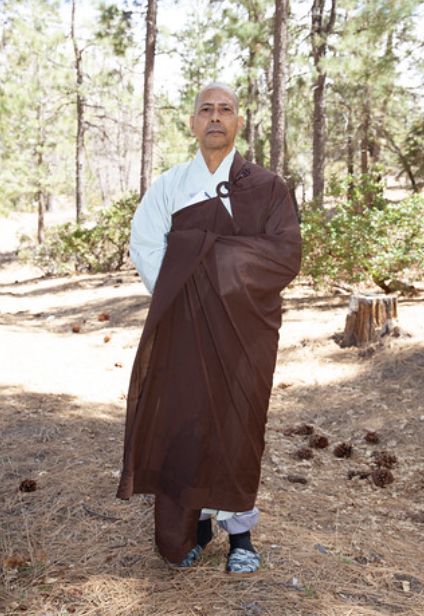
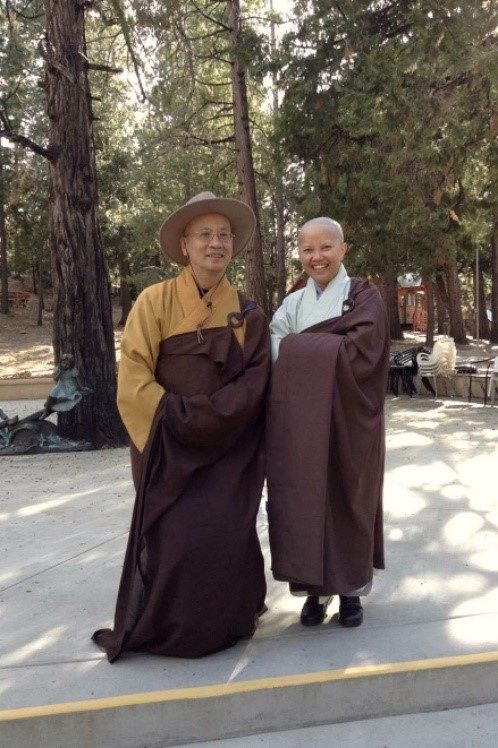
    The light gray section above was the opening of a six-page essay written on March 15, 2014. In a blink, eleven years have passed. Seven times I have ordained, countless times I have changed “roommates.” But one thing remains absolutely unchanged: one Master, a noble being, a true Spiritual Friend (善知識 – Thiện Tri Thức). Venerable Master Hằng Trường still holds the central seat in the Dharma hall, still wears the same black inner outfit; when needed, he dons the golden outer robe—vibrant like fresh turmeric—and the solemn brown sash. That is my Master! Truly a “noble being,” both literally and figuratively.

    Literally, “noble being” refers to his physical stature—he stands as tall as a Westerner; when I stand beside him, my head barely reaches his shoulder. I remember in April 2025, after the “Altruistic Leaving Home Retreat” (XGVT), the CSS family (from all locations) gathered at headquarters. As disciples lined up to bid farewell to the Master, I had to quickly walk up two steps in the receiving-guest room so that he would not have to bend his knees to embrace me. Writing this reminds me of a quirky comparison: According to the legend of the Dragon and Fairy, after giving birth to a sac of 100 eggs, which hatched into 100 children, Lạc Long Quân and Âu Cơ parted ways—50 children followed their father to the sea, and 50 followed their mother to the mountains. Today, our Master has even more than 50 “children” (disciples); and they do not just dwell in the mountains—they reside peacefully everywhere.

    Rather than leading us up the mountains, our Master guides his “flock” along the Bodhisattva path, as taught in the Avataṃsaka (Huayan) Sutra. So, when the retreat ends and it is time to part, Master Hằng Trường’s “children” line up—filling the guest room—to embrace their “young father” (for “Master” also means “Father”) in farewell. Then, the disciples turn to embrace one another before returning to their respective homes. From all corners of the world, whenever there is an XGVT retreat, the “children” return as if to their loving home. First, to revisit a place of peace, love, and warmth; second, to see their “young father” and receive training in body and mind, to listen to the Dharma—which grows more wondrous each year. The more disciples, the greater the joy; the more open the arms and hearts become.

    And during group photos, I’ve sometimes hidden behind the towering figure of this “Noble Being”—partly to practice the principle of “formless and invisible” that I’ve long studied (for what’s learned must be practiced), and partly to enjoy the comfort of “sheltering in Compassion.” In the past, when I heard the phrase “sheltering in Compassion,” I vaguely imagined Buddhas and Bodhisattvas (embodiments of Compassion), and wondered: how can I take refuge in their shadow when I have never met them in person? But now, I understand—Bodhisattvas are not far away. Many “little Bodhisattvas” live quietly among us. And my Master has given me a spiritual shade to rest under, to rely on as I cultivate my mind and transform my character. Not just for me, he offers this to many beings—seen and unseen, sentient and insentient—and continues to give, tirelessly and selflessly.

    Figuratively, “noble being” refers to a true Spiritual Wiseman—one of vast wisdom and eloquence, as countless as grains of sand casually scooped up in a hand. My Master’s knowledge is immense, both innate and cultivated—nurtured by his own Master, the Great Venerable Hsuan Hua, and deepened through tireless study of scriptures and dedicated daily practice, leading to profound realization. He faithfully follows the teachings of Master Hsuan Hua, developing a path of cultivation based on the Avataṃsaka Sutra and the Great Compassion Mantra, structured as follows: (a) One Huayan Bodhi Mind, (b) Two Dimensions of Cultivation and Practice, (c) Three Directions of Development, (d) Four Methods of Burden Resolution, (e) Five Ways of Simple Living, (f) Six Hands of Avalokiteśvara.

    Like the Monkey King—undaunted by mountains or oceans, soaring through clouds and storms, unafraid of dragons or gods—who ultimately could not leap beyond the Buddha’s palm (those five towering fingers like the Five Elements Mountain). I too, despite my restless monkey mind, remain under my Master’s guidance. He knows my karmic roots, my spiritual capacity, and my cultivation as clearly as the lines on his palm. He simply does not say it aloud—but he knows it all (thoroughly/completely).

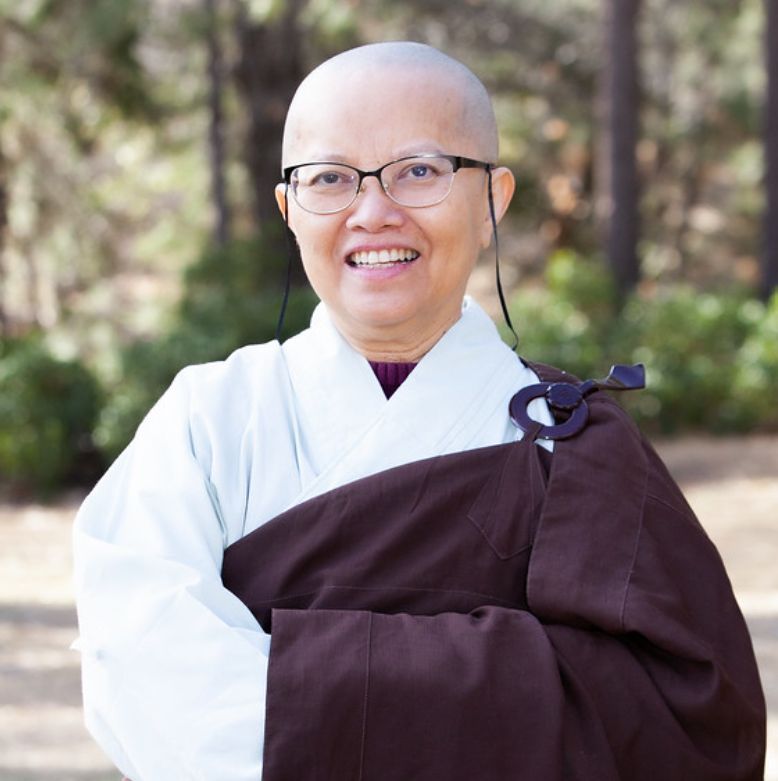
    During my first ordination in 2017, I learned humility from my Master. According to the 1960 Sino-Vietnamese Dictionary by Nguyễn Văn Khôn, khiêm cung means “modest and respectful.” But here, I wish to express a deeper meaning: khiêm cung as a way of being—humble and unassuming. There is an American song titled “If” with the line: “If a picture paints a thousand words, then why can’t I paint you?” I want to share a photo taken with my Master during that first ordination-head newly shaved, wearing a robe and kashaya. To me, this image portrays the humbleness and unassuming traits (as I define it) of a wise Master toward an inchoate, undersized disciple. The photo speaks volumes—through posture, smile, expression, background, and lighting—but I will leave that reflection to each viewer. As for me, I will carry this image for the rest of my life, as a reminder of the “noble being” who, with both virtue and wisdom, accepted a humble student like me.

    And finally, I have come to realize a timeless truth passed down through the ages: A great Master produces great disciples. That great disciple is my Dharma brother!

    My Dharma Brother

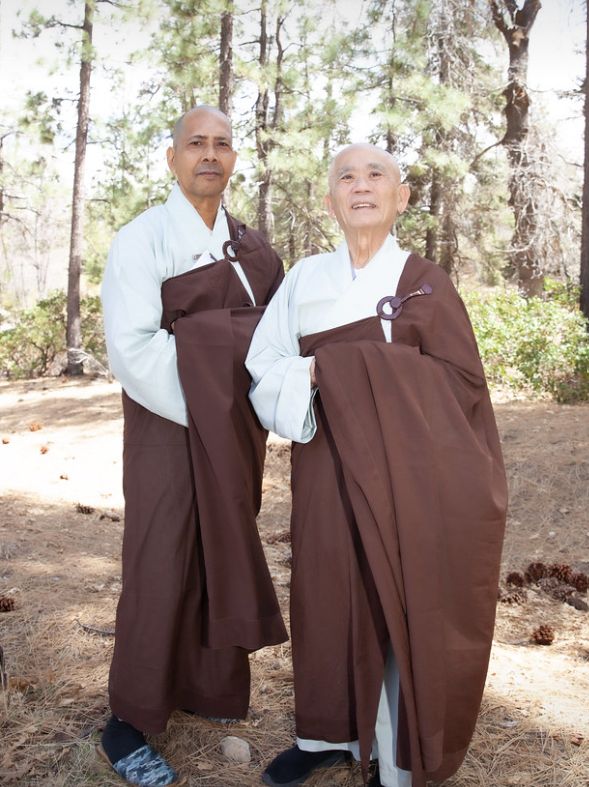
    His Dharma name is Khai Nghiêm who carries within him a rich heritage—Vietnamese and Chinese by blood, raised in France. In his early twenties, after achieving academic and professional success, he let go of his worldly career and ordinary life to walk the spiritual path. He committed himself to the Huayan tradition, dedicating his life to service and the practice of the Bodhisattva ideal.

    He is a “distinguished disciple,” not only in stature—standing nearly as tall as our Master—but also in spirit. He ordained under our Master at a very young age, during his teenage years. In some ways, he even surpasses our Master: he is younger, fluent in more languages (French, English, Vietnamese, and Chinese), and has endured a more painful family history (as I learned this during his visit to Houston in March 2025, when he came to promote the XGVT program. Though I was busy with errands and only caught fragments of his sharing, his gentle and composed words still conveyed the deep sorrow of his family’s past.) He also has the rare privilege of being an older brother—at least to one person. He has a younger sister, who appeared at the recent XGVT retreat in April 2025, accompanied by their elder sister from France. Our Master, on the other hand, being the youngest son in his family, never had the chance to be an “older brother” in the biological sense.

    Despite his youth, Khai Nghiêm always responds with thoughtfulness and care. During the XGVT retreats, his robes are always immaculate and dignified, radiating the noble presence of a model novice monk. In the past, I found him to be rather serious and reserved. But that changed after I sent him a brief email with just two words: “Mô Phật”, expressing my gratitude for being one of the last to be accepted into a time-sensitive program. Since then, whenever we meet, he greets me with a warm smile and the same phrase: “Mô Phật”.  I return the greeting in kind.

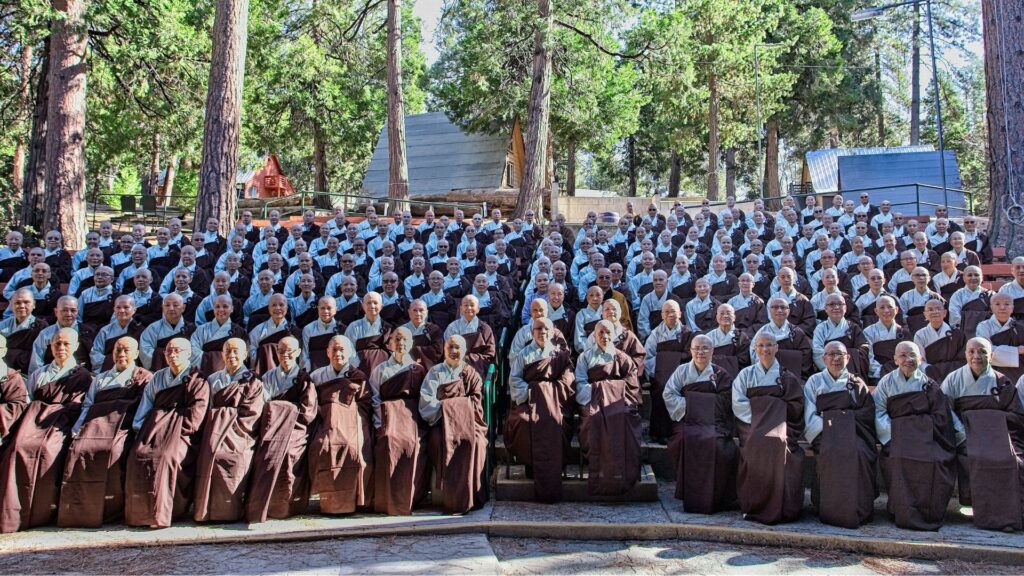
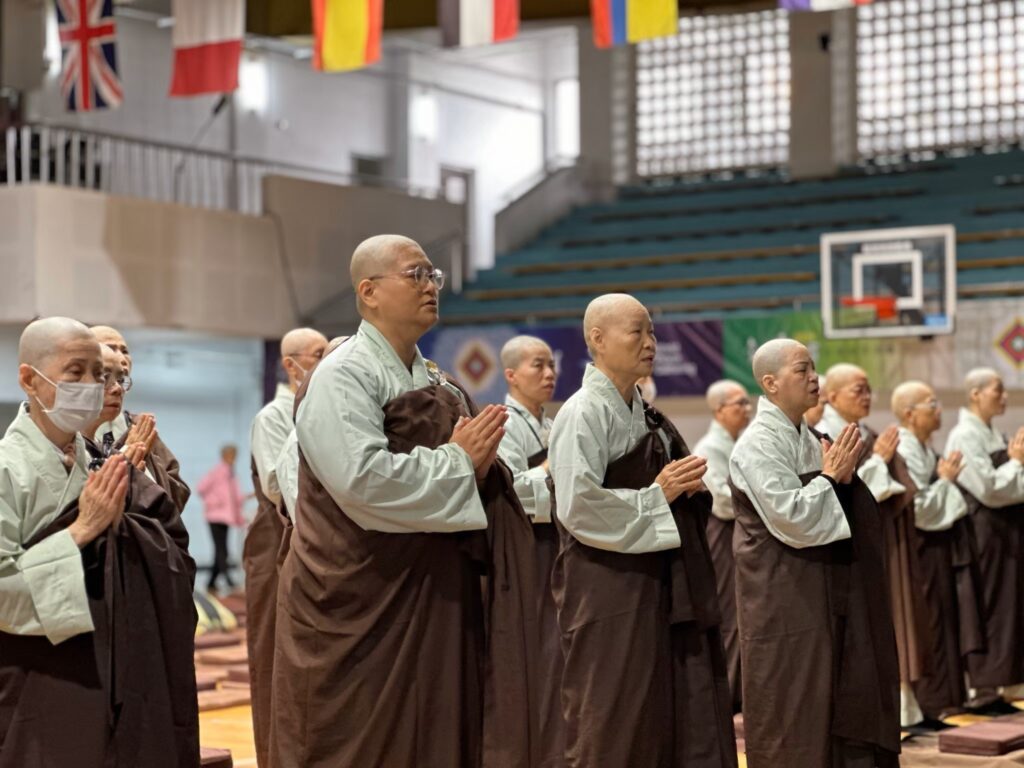
    In earlier years, he oversaw the entire XGVT program. Later, following our Master’s guidance, he passed some responsibilities for the U.S.-Europe branch to Dharma brother Vũ Thượng Quân. Khai Nghiêm now resides in Taiwan, where he focuses on developing and training the monastic community in Asia. He successfully led the first XGVT retreat there in 2024, with 50 novice monks and nuns, under the formal recognition of our Master.

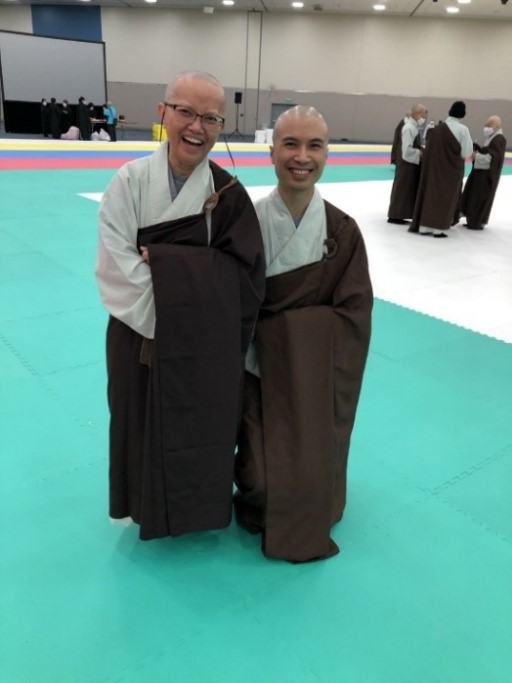
    As time passed and opportunities to work together increased, I gradually grew closer to him. Our connection deepened through shared tasks and small acts of service I was able to offer. It was not until the 2022 XGVT retreat that I finally felt comfortable enough to ask for a photo with him—taken just after our Master conferred the full returning precepts upon the sangha.

    Khai Nghiêm is clearly a true disciple of our Master. He embodies the same gentle humility that our Master once did. His eyes, posture, and smile all reflect youthful kindness and compassion which, in turn, stirred and left a warm impression in me, someone who just begins her journey on the Bodhisattva path.

    I am grateful that Khai Nghiêm is part of this intricate web of karmic connections woven into the tapestry of this humble seeker’s life.

  • My BTHP Reflection: When Serving Becomes Spiritual Practice.

    My BTHP Reflection: When Serving Becomes Spiritual Practice.

    By Lan Choi

    Q: Can you tell us what is the reason(s) you joined the BTHP program?
    A: I’ve always loved volunteering—it feels like a blessing to be able to give. There’s something deeply humbling and joyful about being in a position to offer support, rather than needing to rely on others. To give is to be entrusted with the opportunity to serve, and that in itself is a gift.
    I was also genuinely curious about what the Sangha was learning and cultivating. Becoming a BTHP felt like the perfect doorway—not only to support the retreat, but to witness and participate in the Dharma being lived. It allowed me to observe the Sangha’s practice up close and to reflect on my own path with greater clarity. In many ways, it was both an offering and an invitation to grow.

    Q: Did the essence of being a BTHP shift your core values?
    A: It was a truly meaningful experience—one that reminded me of the importance of humility and the joy of serving. I’ve always loved volunteering, so being able to do that with CSS felt like a blessing. There’s something deeply fulfilling about working alongside others toward a shared goal, especially when that goal is rooted in helping and uplifting others.
    Being a BTHP was rewarding in every sense. I felt a sense of joy and purpose in the collaboration, in the quiet moments of service, and in the collective spirit of care. That kind of community energy—where everyone is contributing with open hearts—is something I deeply cherish. It’s the kind of spirit that nourishes both the giver and the receiver.

    Q: What do you think about the Sangha?
    A: When I saw that the Sangha included people of all ages and at various stages of their spiritual cultivation, something shifted in me—I thought, I could do this. Then, during one of the sessions, Thầy spoke about one of the most selfless acts: the Sangha’s willingness to set aside self and ego in order to dedicate the merits of their practice to others. That moment struck me deeply.
    I realized I didn’t need to wait until I felt “ready” or spiritually advanced enough to understand the Dharma more fully. It wasn’t about reaching some ideal level of cultivation—it was about the act of giving, of being selfless. It was about putting aside vanity and ego to offer the fruits of one’s practice for the benefit of others. Now, it’s simply a matter of continued reflection and cultivation—gathering the courage and humility to take that step and join the Sangha when the time feels right.

    Q: Did you feel your task or role helped you to unfold and nurture the Bodhisattva path?
    A: Absolutely. Being able to learn the Dharma directly from Thầy while simultaneously serving others felt like a true embodiment of Transcending Worldliness and Engaging with the World—stepping out of the world to cultivate, and stepping back in to serve. Working closely with others for many consecutive days, often with little sleep, offered countless opportunities to practice mindfulness and compassion in real time.
    I found myself needing to anticipate potential tensions and consciously prepare to respond with equanimity. It wasn’t just about avoiding conflict—it was about not even allowing negative thoughts to arise when I felt tired or frustrated. That kind of mental preparation and inner discipline felt deeply aligned with the Bodhisattva path. If I can carry that same intentionality into my daily life, it would be a gift—not only for myself but for those around me.

    Q: What was your most uplifting moment during the retreat?
    A: One of the most uplifting moments for me was during our group mantra recitations, when Thầy began to sing the Thousand-Petal Lotus song for YSA. As more voices joined in, a wave of peace and joy washed over me—a feeling of deep connection, not just to the music, but to its meaning and the collective energy of the Sangha.
    I remember vividly the joy of simply being there—fully present, learning from Thầy, and cultivating alongside others. It felt like such a blessing, a moment suspended in grace. That song in particular has stayed with me. I’ve been singing it at home almost every day so I don’t forget. And each time I reach the high note, I feel something stir in me—something tender and true. It’s as if the song itself is a gentle reminder of the beauty of the path and the gift of being part of it.

    Q: What was your most memorable moment?
    A: It was when the BTHP team gathered after our serving shift to sing and celebrate the birthday of one of the dining hall workers—Christy, I believe. Though most of us had only met her a few days earlier, the warmth and sincerity of the gesture deeply moved her. The outpouring of love from near-strangers was palpable, and her co-workers, too, seemed touched by the spontaneous act of kindness.
    It was beautiful to witness people from different backgrounds—many of whom barely knew each other—come together in such a genuine spirit of care. I remember feeling inspired by our Dharma sister Antee’s open-heartedness, her ability to embrace someone she had just met with such ease and joy. In that moment, I thought: This is what Thầy has been teaching us.

    Q: Did the spirit of BTHP help you become more compassionate and supportive of others in daily life after the retreat?
    A: When I read Diana Ta’s text about being gentle in the way we serve and carry ourselves, it made me realize that how we serve is just as important as the act of serving itself. The quality of our presence—the softness, the mindfulness, the intention—speaks volumes about our inner state.
    Service isn’t just about completing tasks; it’s a mirror of our mindset and heart. When we move with gentleness, we embody compassion. When we serve with humility, we cultivate selflessness. That awareness has helped me see service not just as an offering to others, but as a practice of inner refinement.

    Q: Thank you for the conversation, Chị Lan Choi. Is there anything else you’d like to share before we end?
    A: Thank you for the opportunity to become a BTHP. It’s an experience I’ll carry with me always—filled with meaningful moments, deep reflections, and friendships that I’ll never forget. I’m truly grateful for the chance to serve, to learn, and to grow alongside such a beautiful community.

  • Letting Go Through a Strand of Hair

    Letting Go Through a Strand of Hair

    Thúy Võ / Thân Khai Thí Nhậm

    When I first heard the dharma friends from CSS SJ introduced the Altruistic Home Leaving Program (XGVT), I let them know right  away that I wanted to join, because the thought of getting ordained had planted a seed in me for many years. Even when they emphasized that participating in XGVT, I will have my head shaved. 

    That was back in July 2024. In October 2024, the organizing team sent out the official registration announcement. And within a week or two, I completed the registration, paid the fee, started requesting time off from work, finding childcare, ordering the ceremonial robes for the XGVT retreat which began in April 2025.  From registration to the moment I donned the robes of an aspirant, it was about six months. During that time, my heart was full of excitement. I studied mantras, listened to Dharma talks, explored the meaning of XGVT, connected with fellow participants, and prepared myself so that the practice would come more easily once the program began. 

    Was I worried? Yes. I was worried, first of all, whether I was “qualified” for the ordination when I knew very little of Buddhism or the Avataṃsaka teachings of the Venerable Master. I was also worried that what would my daily normal life look like without hair? Would I need to wear a hat or a wig? The question had lingered in my mind for months.

    Just like other women, I loved my hair so much. I always made sure to use the best haircare products, and limited blow-drying to avoid damage. I liked watching hair styling short videos and playing around with my hair. But after deciding to shave my head, I wasn’t afraid of “losing” it because I knew it would always grow back eventually. In that 6 months, I looked in the mirror almost everyday and imagined how I’d look like – being bald.

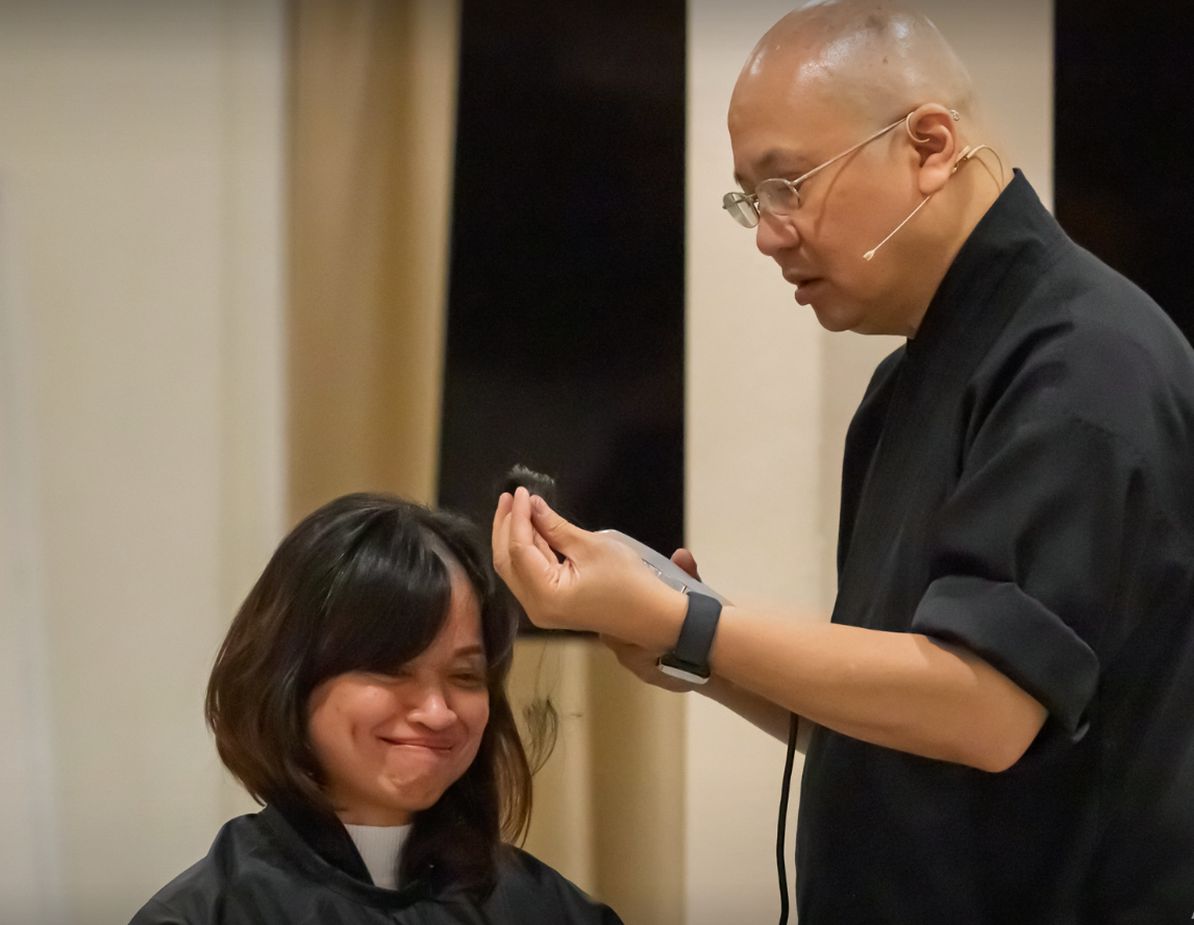
    Yet when the Master shaved my head and I entered the retreat, living among a Sangha of others who had no hair just like me; and even everyone said I looked “bright” and “beautiful”, I couldn’t bring myself to look in the mirror for days. Even when I needed to shave to keep my head smooth and shine, I avoided the mirror. It wasn’t until the fifth day. I saw myself as if I was a “man”, or “gangster”. My emotions were mixed, but I never regretted ordaining, not a day after returning to normal life. I didn’t bother wearing a wig in public or at work. I smiled when I saw children or strangers looking at me with curiosity in their eyes. The anxiety I once had about my bald head seemed to fall away like the strands of hair the Master cut off before I entered the retreat.

    What I felt after shaving my head was: Lightness. And a lesson of “Letting Go.” 

    When I decided to ordain and to shave my head, I began learning to let go, for six months. Yet on the day I shaved my head, I was in shock. A real shock. Though that feeling has passed, I’ll never forget that feeling. I learned a priceless lesson: letting go is not easy. Even with something as simple as hair—something I knew would grow back—I still felt shaken. So what will it be like on the day I leave this life? How much more intense will that shock be?

    For that, I discipline myself to practice dharmas—to truly let go with ease.
    How long will I need to learn? I don’t know.
    Will I succeed? I don’t know.
    But I will keep learning.

    Moreover:

    Whether I ordain or not.
    Whether I practice a lot or a little.
    Whether I have hair or not.
    Whether my hair is long or short.
    All of it is sacred.

    Becoming a novice nun for ten days was deeply sacred to me. My hair was sacred to me. Losing it was sacred to me as well. The life and dharma lessons I received after ordaining were sacred to me. Many people ask if I’ll do XGVT again. I honestly answered, I don’t know. Deep down, I know I will—but not sure when. Perhaps, whenever I’m ready.

    I’ll be deeply grateful if people would help me preserve those sacred things.
    Everything that comes into my life is a karmic connection.
    I hope to keep and nurture those connections as wholesome ones.

  • Meanings of the Conch Shell: Symbol of Ego, Journey of Transformation

    Meanings of the Conch Shell: Symbol of Ego, Journey of Transformation

    Thân Hỷ Trường

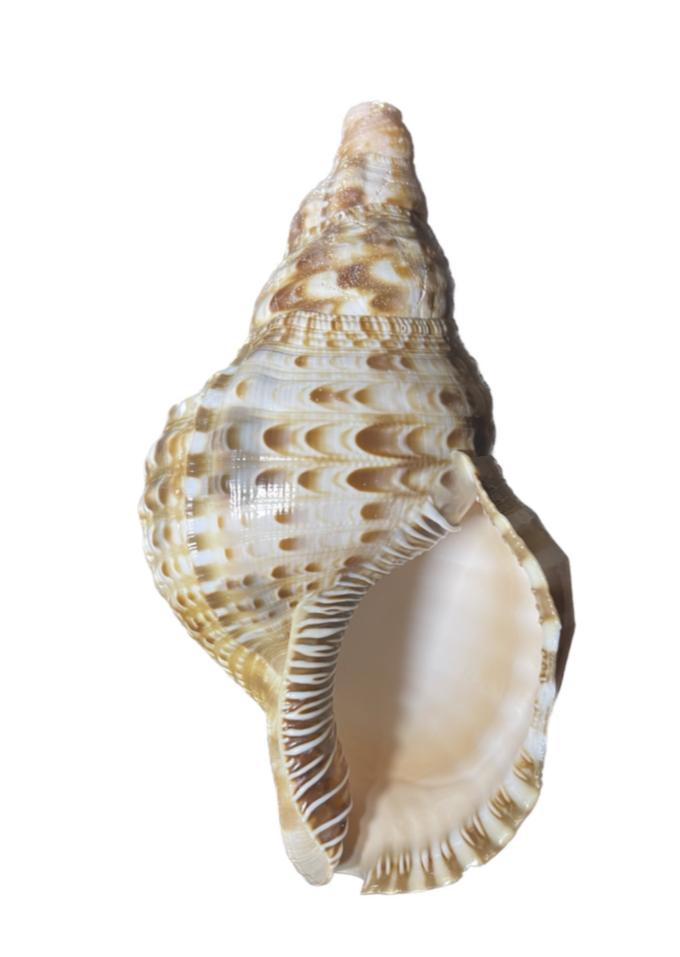
    The conch shell is a small creature, yet it carries a large and heavy shell. That weight causes it to sink and lie silently at the bottom of the deep ocean. Spiritually, we humans are like that conch shell. We carry an invisible but immensely heavy and vast “shell”: the ego. Our attachment to the ego weighs down our consciousness, dragging us into the depths of ignorance, causing us to suffer in the endless cycle of samsara.

    The shell envelops the entire body of the conch shell, keeping it still and silent, unable to move freely through the vast ocean. Similarly, the ego – with its thick layers of habitual tendencies and defilements—envelops and binds our consciousness. It keeps us stagnant in delusion, unable to take steps on the path of spiritual awakening. The shell is hard and difficult to penetrate; its toughness becomes a barrier that prevents the conch shell from interacting with the dynamic environment of the sea. Likewise, the human ego is deeply entrenched, formed from countless prejudices, opinions, and dualistic views. It blocks us from hearing the teachings of masters and sages, obstructs the reception of wisdom’s light, and closes our hearts to the truth that permeates the universe.

    The conch shell is a vivid symbol of the ego—formless, yet it makes us believe we are “somebody,” the center of the universe. Though its body is small, its large shell makes it think it is grand and extraordinary. The ego is the same: though empty, it constantly creates the illusion of its own monumental importance. Conch shell often live isolated and solitary at the ocean floor, avoiding mingling with others to form a group. Likewise, when humans are clouded by ego, they easily fall into loneliness and separation, living in a world of their own making. This stands in stark contrast to the Bodhisattva’s vow—to transcend the small self and merge with the truth of altruism, constantly expanding the web of interconnection.

    To use a conch shell as a horn, the body must no longer reside within it. When the shell is empty, it can be transformed into a conch. Its spiral interior amplifies sound, and a small hole is often cut at the pointed end to create a blowing tube. The flared mouth of the shell helps direct and project sound far and wide, making the emitted sound loud and resonant. Symbolically, if we wish to “call out”—to connect, inspire, or summon others effectively—our attachment to ego must be transformed. Only when consciousness is freed from the grip of the self can we become a conduit for transmitting truth.

    In the dharma practice of “Bảo Loa Thủ Nhãn” (Jewel Conch Hand and Eye), the shell is not merely a lifeless object but a sacred dharma object capable of transforming darkness into light, turning afflictions into clarity. It embodies the profound philosophy that “afflictions are none other than enlightenment.” The shell used in this practice is a true symbol of transformation. Darkness—representing afflictions, ignorance, and obstacles—enters the belly of the shell not to be rejected or destroyed, but to be gradually transformed into light through the sacred power of the ŚCA seed of luminosity. When this light passes through the exit hole at the tip of the shell, it becomes a laser beam shooting upward.

    When a conch shell dies, its flesh decays and is consumed by sea creatures. Its empty shell begins a long journey toward the shore. Lying at the ocean’s depths among mud and sand, it is gradually pushed by currents, tides, and waves toward land. This journey is not easy—the shell collides with sand and rocks, gets caught in seaweed, and may be pulled back by waves. Shells from the deep sea may take hundreds of years to reach the shore. In coral-rich or island areas with strong currents, the journey may be shorter, but most shells endure a long passage from the ocean’s heart to the beach.

    When we hold a conch shell and feel its smooth, polished surface, we’re touching the result of countless collisions with sand and coral, worn down over time. In contrast, shells still at the ocean floor are rough and coarse, having never undergone such abrasion. This is the image of the spiritual path. The road to enlightenment cannot be measured in months or years—it is a lifelong, even multi-lifetime accumulation.

    We are adrift in the ocean of suffering, swept by karmic currents and conditions, yet we also encounter invisible streams of dharma that gradually guide us to the shore of awakening. On this path, every stumble, every adverse condition or disappointment, is a moment of refinement. Only when our hearts are sufficiently polished and trained through hardship and challenge can our spirit evolve, leading to a consciousness that transcends the ego’s grip—liberated from delusion and irrationality.

    The message of the conch shell teaches us a profound philosophy. From being enclosed, fixed, and silent in the deep ocean, the shell begins to drift, surrender, undergo change, and finally reaches the shore. The once useless shell now becomes a conch that emits powerful sound—gathering, informing, and signaling others. Likewise, each of us lives within our own “shell”—the shell of ego, of the hardened and clinging self. But if we can let go of the mistaken notion of “I,” and transform our self-centered consciousness into selfless awareness, then like the ancient shell, we begin a new life—not rigid and meaningless, but full, purposeful, and beneficial to others.

    This journey of transformation is not short. From lying silently at the ocean’s bottom to being picked up, cleaned, and used, it is a long, quiet process requiring much time. Similarly, on the path of practice, we cannot expect quick results. We need patience, perseverance, and deep faith in the Dharma. Never think of yourself as “somebody”—someone important or special. Instead, always remind yourself that you are just a small conch shell, lying quietly at the bottom of the ocean of afflictions and ignorance. But if you maintain humility, steadfastness, and diligent practice, then one day, that small conch shell will be transformed and ultimately become a sacred dharma object in the practice of “Bảo Loa Thủ Nhãn,” bringing forth miraculous and inconceivable effects.

  • Letter from a first timer Altruistic Home Leaving in Taiwan

    Letter from a first timer Altruistic Home Leaving in Taiwan

    蔡惠玲 – Thái Huệ Linh / Dharma Name: 親怡慈厚 – Thân Di Từ Hậu

    When I was young, I held a quiet dream in my heart: to enter monastic life. But my mother needed me by her side in her old age, and out of deep filial love, I set that aspiration aside. I told myself gently, “It’s alright. If not in this life, perhaps in the next, I will become a Buddhist nun.”

    Years passed, and now my parents are old and frail. In March 2024, I was blessed with the opportunity to visit the mountain sanctuary of the Compassionate Service Society. There, I heard Venerable Hang Truong speak about the Altruistic Monastic Program (Xuất Gia Vị Tha – XGVT)—a beautiful practice of ordaining not only for one’s own liberation, but as a sacred offering for loved ones, dedicating all merit to them. His words touched something deep within me. The calling to walk the spiritual path for the benefit of others awakened a powerful compassion, and I knew I had to be part of it.

    With sincerity and joy, I vowed to dedicate every drop of merit from this brief but profound journey to my parents—and especially to my sister and brother, who have not yet learned about the Dharma. As children, they often brought sorrow to my parents, and that pain settled quietly in my heart over the years. Through this program, I offered my prayers with hope: that the energy of my practice might help them awaken a deeper love for our parents and a life rooted in compassion.

    Some may wonder why anyone would renounce everything for the spiritual life. To them, it may seem an extraordinary, almost impossible choice. But for me, ordaining—even temporarily—is the awakening of Bodhicitta: the altruistic heart that transcends self-centeredness and moves toward boundless care. Though I didn’t fully ordain in this lifetime, joining XGVT was the planting of a wholesome seed—a first step on the path of liberation. I trust that with this karmic momentum, full ordination will unfold swiftly in a future life.

    When I returned home from the program, I saw something quietly miraculous. My parents had softened—their spirits calmer, their words gentler—and our home was filled with warmth. I truly believe it was the compassionate energy of the practice and the depth of the altruistic aspiration that brought about this transformation. The XGVT program is not only profound, but also deeply practical and sacred. It bridges the heart of the monastic ideal with the realities of everyday life, allowing me to live the Bodhisattva path in the here and now.

  • Reflections on the XGVT Journey: A Deep Offering of Gratitude

    Reflections on the XGVT Journey: A Deep Offering of Gratitude

    Nguyễn Mai Trang

    I have been fortunate to attend many “Xuất Gia Vị Tha” (Altruistic Home Leaving) retreats over the years, for two profound reasons. First, the aspiration of one who undertakes these vows shines as a beacon—illuminating a path of love and selfless service that is both noble and deeply practical. In my own family, there are many dear ones to whom I wish to dedicate my practice: my husband and younger brother who have passed away, and many elderly relatives in both sides of my family facing illness, hardship, and the decline of age. My love for them has always burned quietly within me, and the XGVT retreat allows me to express that love through concrete action—a flowing stream of compassion that brings them hope, relief, and light.

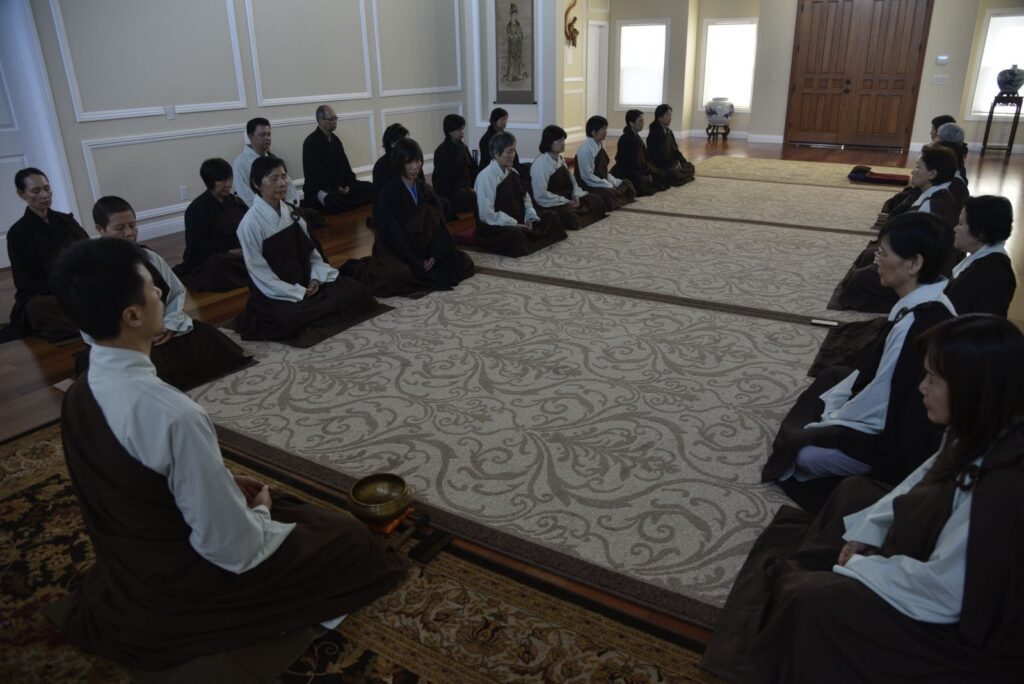
    The second reason is the profound Dharma guidance offered by Thầy  during each retreat. The meditation sessions, in particular, have brought about tremendous transformation in me. Strangely enough, I found myself sitting longer, more focused, and more at ease than in previous times. Perhaps the appearance and intention of a monastic helped me release more easily the worries and entanglements of worldly life. Or perhaps it was the Thầy’s method—so clear, methodical, and balanced between theory and practice—that helped me cultivate strong mindfulness and deep concentration.

    In 2024, due to a decline in my health, I sadly had to miss the winter XGVT retreat, unable to endure the harsh cold. Though disheartened, I still held the hope that I’d regain enough strength to return in 2025. In August of that year, to pray for the blessings of the Buddhas and Bodhisattvas to fulfill that wish, I joined a group of Dharma friends on a pilgrimage to Castle Mountain in Canada—a sacred site associated with Manjushri Bodhisattva. Though I knew the path up the mountain would be long and arduous, I remained undeterred. I thought to myself: how many times in one lifetime does one get to set foot on such hallowed ground?

    And indeed, it was miraculous. Over the span of the eight-hour journey—both up and down the mountain—I felt a mysterious energy lifting and supporting both my body and spirit, as though some invisible force were silently sustaining me. When I finally reached the summit and joined others in the ceremonial offering, I sensed my prayer had been heard. My health gradually improved, just in time for the spring XGVT retreat, where I returned with a heart full of reverence and deep gratitude to the Triple Gem.

    Even now, when I look back on those days, emotion rises in me like a tide. There were moments of such holiness and wonder—like the grand Mandala ceremony, where an atmosphere of sacred stillness filled the space. With thousands of voices chanting in unison, devotedly guiding lost souls toward the inner light of liberation, I was profoundly moved by the spiritual energy radiating from our collective sincerity and boundless compassion.

    There were also tender, heartwarming moments—such as the prayer ceremony for Thầy’s health and longevity, held by Rinpoche and his fellow Tibetan monastics. Watching Thầy moved to tears by their offering, my own heart swelled with reverence. It was a moment of deep spiritual connection—an embodiment of the sacred bond between Teacher and disciple.

    Returning to the XGVT retreat this year, I recognize how much I’ve changed. My heart feels more spacious now—less caught in attachments, more open to forgiveness, gentler in facing life’s challenges. The Dharma Thầy has imparted continues to help me break free from the narrow confines of ego. Before me now, the spiritual path opens wide—clear, peaceful, and radiant. With immense gratitude to Thầy and my fellow practitioners, I vow to continue this journey of transformation and spread the light of true compassion wherever it may reach.

  • My Dharma Protector Journey

    My Dharma Protector Journey

    Thu Nga Nguyễn – Thân Khai Nhiên

    My name is Thu Nga. In 2017, a friend invited me to attend the World Peace Gathering (WPG) Mandala event in Long Beach. This rare and fortunate encounter completely transformed my spiritual life.  From the moment I stepped into the hall, I was astonished by the elegant and artistic arrangement of everything.

    Entering the main sanctuary, my heart trembled at the sight of such a solemn setting—unlike anything I had seen at any temple before. 

    The volunteers of the Compassionate Service Society (CSS) welcomed me with warmth and kindness. Their polite greetings and friendly demeanor filled me with a gentle joy—a sense of openness in my heart that I had never experienced before.  That very day, I felt a sudden desire to accompany these volunteers in their service work. In fact, I had long held a wish to contribute my efforts to the community, but I had hesitated because I had yet to find a suitable organization. 

    After two days at the WPG Mandala I began to explore the Compassionate Service Society in greater depth. To my great fortune, I realized that the association’s vision and structure aligned perfectly with what I had been searching for. Their spirit of volunteerism was not just about offering help—it carried an element of sacrifice, a selfless devotion to others, exactly in line with the ideals of service I had yearned for over the years. 

    From that moment on, I officially became a member of the CSS. This experience has helped me grow in many ways—physically, mentally, emotionally, and spiritually. The Bodhisattva Path training program led by Thay guided me in opening my heart, bringing clarity to both my spiritual path and my everyday life. I came to understand my true purpose in life. 

    Since joining the Bodhisattva Protector program, its meaning and mission have become increasingly clear to me.Serving others is no longer just a choice—it has become an essential part of my spiritual practice.Now, having participated in the Bodhisattva Protector program for three consecutive years, I have witnessed the profound dedication of the monastics who take on the path of selfless renunciation. With deep respect, I wholeheartedly dedicate my humble efforts to support them in their spiritual journey. This has also given me the opportunity to apply the principles of the Bodhisattva Path to real-life practice. 

    As Thay has shared, a truly complete practice is one that balances transcendence and worldly engagement. I am profoundly grateful to Thay for nurturing my Bodhi mind. Every year, the WPG Mandala bring me heartwarming memories and deepen my gratitude toward the Buddhas and Bodhisattvas—for granting me the conditions to cultivate, and for guiding me to meet Thay who has opened my heart.  The most precious gift I have received from Thay is help in discovering my life’s mission—which includes my heartfelt vow to become a Bodhisattva Protector every year.
  • My commitment to the altruistic monastic life

    My commitment to the altruistic monastic life

    My commitment to the altruistic monastic life, like that of my fellow practitioners in the sangha, is a heartfelt offering through practice—seeking to bring benefit and peace to others, to something beyond myself. 

    In my first year, I dedicated my merit to my father’s health. In the following years, I prayed for world peace, particularly for the victims of the war in Ukraine. Then, I turned my aspirations toward my homeland in Central Vietnam, wishing that the devastation of floods would come to an end. This year, I have taken monastic vows on behalf of dear friends who longed to do the same but were unable to. Though the reasons for ordination change each year, the joy in my heart remains constant, knowing that I am contributing to healing, support, and hope for others. 

    This motivation—to practice for the sake of someone else—has helped me navigate the challenges of this retreat. I always carry the words of my teacher in my heart: to enter monastic life without fear of hardship, difficulty, or constraint. When we nurture an intention for the well-being of others, every challenge becomes merely another step on the path. 

    I am profoundly grateful to my teacher. In this year’s altruistic monastic retreat, he has imparted deep wisdom through meticulously structured, step-by-step practices. Though my own level of practice may not be advanced, I have been able to follow and engage fully. I have vowed to continue practicing the “Column of Light” method each day. Meeting my teacher has been an incredible blessing, and I feel immense happiness walking this path under his guidance. 

    How do we measure fulfillment, my friends? For me, the fulfillment of this year’s monastic retreat is reflected in a life that is more peaceful and whole—a life that spreads its harmony to loved ones, bringing them greater joy and serenity. I hope this transformation reaches the larger community, planting seeds of well-being in every heart and nurturing the wish for universal benefit. In the end, I vow to walk steadfastly on the Bodhisattva path, uninterrupted and unwavering.

    Kim Xuân Lý

    Thân Nghinh Xuân

  • Sangha 2025 – Letter of Appreciation

    Sangha 2025 – Letter of Appreciation

    Dear Dharma Brothers and Sisters,

    We express our heartfelt appreciation as we present the certificate for your participation in the 12-day retreat of the Altruistic Home-Leaving program – the Temporary Sangha 2025.

    Living a simple monastic life, disconnecting from the grid, and leaving the everyday world behind for twelve days is no small feat. Your commitment symbolizes your vows and dedication to a loved one, and its value is beyond measure.

    This certificate also signifies that the training does not conclude here. The profound teachings of the Column of Lights mark merely the beginning of our spiritual journey towards fully realizing our bodhi mind. You are warmly invited to engage in ongoing education and training throughout the year, leading up to the next Sangha retreat in March-April 2026.

    Our vision is to build Sangha of cultivators. As organizers, we often contemplate how to best serve our participants, asking ourselves, “What do you gain from our retreat?” Our answer distills down to the simplest and most essential core of the Sangha: we hope each of you internally absorbed the dharma. Everything else is a delightful bonus.

    This is the path we are forging ahead on, and there is still much work to be done. Your involvement is a significant step forward.

    With appreciation,

    Khai Nghiem

    CompaSS Sangha Leader

  • I have returned Home

    I have returned Home

    Thân Khai Phong

    I have gone through long years of illness. I distanced myself from society, living in darkness, avoiding contact with anyone, and even limiting interaction with my own family.

    Then one day, having learned about the World Peace Gathering (WPG) in Southern California in a few weeks, I was suddenly awakened. Memories of attending the Altruistic Home-Leaving retreats came back to me vividly. It felt like a movie playing in my mind. It was a wonderful week spent living together with the monastic community, familiar faces, and fellow practitioners from near and far, gathering in the peaceful Big Bear mountains to experience the true life of renunciation, far away from the noise of the mundane world… I was momentarily speechless, savoring that moment of happiness and indescribable joy.

    Then, that weekend, I went with my wife to the CSS Center nearby, to participate in activities with fellow practitioners that I hadn’t seen for a long time. As I approached the entrance, from a distance, my dharma brothers and sisters immediately recognized me. They warmly welcomed me as if I were a long-lost sibling returning home. Overwhelmed with emotions, I felt grateful for the warmth and love radiating from everyone, especially their encouragement, advising me to attend the gatherings more regularly. In my heart, I promised to return and consider them my second family.

    The day of the two-day Dharma Assembly arrived. Once again, I met old dharma friends from various states across the United States, some from Canada and Germany. They embraced me with both joy and sorrow at our long separation. Perhaps, they felt a tinge of sadness seeing me now, no longer as strong as before, relying on a walker for mobility. For two consecutive days, with a sincere heart, I listened attentively to Thầy’s Dharma teachings. In the evening, I watched the procession of people lighting candles and circumambulating the Anaheim Convention Center grounds, a unique and solemn sight.

    The most exceptional moment was when I had the chance to meet four Masters. Thầy Hằng Trường recognized me right away. He held my hand as if transmitting energy to me and gently tapped my head while giving me words of encouragement to continue my spiritual practice. Thầy Hằng Đức and two other Masters also greeted me and bestowed blessings upon me.

    Returning to my hometown with a renewed spirit and happiness, I began regularly participating in group activities with fellow practitioners, such as practicing Tai Chi every morning, repentance ceremonies, reciting the Flower Adornment Sutra compiled by Thầy, and memorizing the Great Compassion Mantra (which I thought I had forgotten). I diligently recited sutras daily, reviewed Thầy’s teachings, and practiced writing the Hand-Eye seeds of light, immersing myself in serious practice.

    Thank you, all my CSS brothers and sisters, for spreading love and encouragement and providing opportunities for me to continue my cultivation practice. I’m grateful to my family for always being by my side, caring, and loving me. I’ve rediscovered my network of connections, my web of affinities. Dear Thầy, dear dharma brothers and sisters: “I have returned home!”

  • New Year – New Vows

    New Year – New Vows

    Hoàng Kim Yến – Thân Lạc

    When I was young, I often went to the temple to participate in Buddhist family activities and had many opportunities to interact with nuns. Those nuns had very gentle and peaceful steps, living in harmony and cherishing the miracles of heaven and earth is always in my mind.

    Those beautiful and touching images embedded a deep desire in my heart to become an altruistic nun when I grow up. But as the years passed quietly and being busy with daily bread and butter, I also forgot my childhood wish until the day I heard Master Heng Chang’s lecture on “Cultivating for others”.

    Following in Buddha’s footsteps, I decided to make a vow to become a surrogate nun for my mother with the wish to dedicate all blessings to her. I made an effort to develop full devotion in understanding, nurturing, respect and obedience towards my beloved mother.

    During the 10-day retreat in Big Bear Lake, Master Heng Chang taught the method of practicing the Avatamsaka Hand-Eye Dhama through familiar objects in daily life to experience the miraculous truth: The unchanging nature of the True Mind and the constant opening of Bodhicitta, the Bodhi mind.

    Wishing to follow Master Heng Chang’s shining example, I vow to maintain diligent efforts to cultivate an open mind with wholesome nature to transform myself and others in every moment of life. With a heartfelt respect and deep gratitude, I bow down before Thay and the Sangha.

    Thân Lạc

  • Meditation Joy

    Meditation Joy

    Let’s meditate each day 
    Practice being relaxed and free
    Emanate warmth in every way
    To those sad and unhappy

    Be physically and mentally peaceful
    Let go of internal tensions
    Release all social contentions
    And open wide our heart of compassion

    Be giving and forgiving
    For the heart to feel peaceful
    When sitting still in serenity
    We’ve come home happily.

    Hoàng Tâm

English